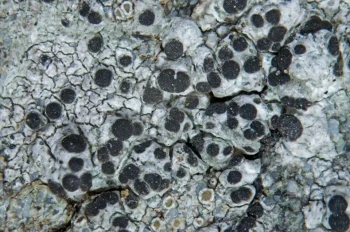
Diplotomma Lichen: The Crusty Garden Guest You Can’t Invite
Have you ever noticed those grayish-white, crusty patches growing on rocks, tree bark, or even concrete surfaces around your garden? You might be looking at diplotomma lichen (Diplotomma alboatrum), a fascinating organism that’s more complex than it first appears. While you can’t exactly plant this little wonder in your flower beds, understanding what it is and why it shows up can help you appreciate the hidden ecosystem thriving right under your nose.
What Exactly Is Diplotomma Lichen?
Here’s where things get interesting: diplotomma lichen isn’t actually a plant at all! It’s what scientists call a composite organism – essentially a partnership between a fungus and algae (and sometimes cyanobacteria) living together in perfect harmony. The fungus provides structure and protection, while the algae photosynthesizes to create food for both partners. It’s like nature’s ultimate roommate situation, and it’s been working for millions of years.
This particular lichen goes by the scientific name Diplotomma alboatrum, though you might occasionally see it referenced under its older names like Buellia alboatra or Rhizocarpon alboatrum in some field guides. Don’t let the name changes confuse you – it’s the same crusty character.
Where You’ll Find This North American Native
Diplotomma alboatrum is native to North America and can be found across much of the continent. This hardy lichen has adapted to various climates and environments, making it a relatively common sight for those who know what to look for. You’re most likely to spot it in areas with reasonably clean air, as lichens are notoriously sensitive to air pollution.
Identifying Diplotomma Lichen in Your Landscape
Spotting diplotomma lichen is easier once you know its signature look:
- Forms crusty, whitish-gray to pale gray patches or crusts
- Grows flat against its substrate (the surface it’s growing on)
- Has a somewhat rough, uneven texture
- Typically found on rock surfaces, tree bark, and sometimes concrete or other hard surfaces
- May appear slightly greenish when wet
- Often has small, dark spots (these are reproductive structures called apothecia)
Is Diplotomma Lichen Good for Your Garden?
While you can’t cultivate diplotomma lichen like your favorite perennials, its presence in your landscape is actually a positive sign! Here’s why you should welcome this crusty guest:
- Air quality indicator: Lichens are sensitive to air pollution, so their presence suggests you have relatively clean air
- Ecosystem support: They provide food and habitat for various small creatures, including insects and mites
- Erosion prevention: By growing on rock surfaces, they help stabilize soil and prevent erosion
- Natural beauty: They add subtle texture and interest to otherwise bare surfaces
The Truth About Growing Lichens
Here’s the thing that might surprise you: you can’t actually plant or grow diplotomma lichen in your garden like you would a tomato or rose bush. Lichens establish themselves naturally when conditions are right, and they grow incredibly slowly – sometimes just a few millimeters per year.
What you can do is create conditions that welcome them:
- Maintain good air quality around your property
- Leave natural rock surfaces and mature tree bark undisturbed
- Avoid using harsh chemicals or pressure washing surfaces where lichens might grow
- Be patient – lichen establishment can take years or even decades
Common Misconceptions About Lichens
Let’s clear up a few things about these fascinating organisms. Diplotomma lichen and other lichens:
- Don’t harm trees or rocks – they just use them as a place to live
- Don’t require fertilizer or watering (they get moisture from air and rain)
- Aren’t signs of disease or poor plant health
- Won’t spread like weeds or take over your garden
Appreciating the Slow and Steady
In our fast-paced gardening world of quick-growing annuals and instant gratification, diplotomma lichen reminds us to slow down and appreciate the subtle, long-term processes happening in nature. These remarkable organisms can live for decades or even centuries, quietly doing their part to support the ecosystem while asking for nothing in return except clean air and a place to call home.
So the next time you spot those crusty gray patches around your landscape, take a moment to appreciate the complex partnership at work. You’re witnessing one of nature’s most successful collaborations, and that’s pretty amazing – even if you can’t add it to your garden wish list!