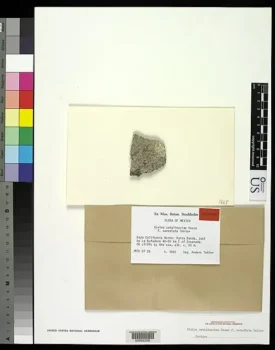
Dirina Lichen: A Coastal Rock Dweller Worth Knowing
If you’ve ever explored the rocky coastlines of California and noticed pale, crusty patches decorating the cliff faces, you might have encountered the fascinating Dirina catalinariae, commonly known as dirina lichen. This isn’t your typical garden plant—in fact, it’s not a plant at all! This unique organism represents one of nature’s most remarkable partnerships and plays an important role in coastal ecosystems.
What Exactly Is Dirina Lichen?
Dirina lichen is actually a composite organism made up of a fungus and an algae living together in a mutually beneficial relationship called symbiosis. The fungus provides structure and protection, while the algae produces food through photosynthesis. This incredible partnership allows lichens like Dirina catalinariae to thrive in some pretty harsh environments where most other organisms would struggle.
Native to North America, this lichen has carved out its niche along the coastal regions of California, where it’s perfectly adapted to the salty, windy conditions that would challenge many other life forms.
Where You’ll Find Dirina Lichen
Dirina catalinariae calls the coastal areas of California home, with a particular fondness for the Channel Islands region. You’ll typically spot this lichen growing on exposed rock surfaces, especially on cliffs and rocky outcrops that face the ocean.
Identifying Dirina Lichen
Spotting Dirina catalinariae is easier once you know what to look for:
- Forms white to pale gray crusty patches on rock surfaces
- Has a cracked, puzzle-piece appearance when mature
- Grows directly on the rock substrate, appearing almost painted on
- Typically found on vertical or sloping rock faces
- More prominent in areas with good air circulation and some moisture
Is Dirina Lichen Beneficial to Your Garden?
While you won’t be planting dirina lichen in your flower beds anytime soon, its presence in natural areas around your property is actually a great sign! Lichens are excellent indicators of air quality—they’re sensitive to pollution and only thrive in areas with clean air. If you spot dirina lichen on natural rock formations near your home, it’s telling you that your local environment is healthy.
In the broader ecosystem, lichens like Dirina catalinariae contribute to soil formation by slowly breaking down rock surfaces over time. They also provide food and shelter for various small invertebrates, making them an important part of the coastal food web.
Can You Encourage Dirina Lichen?
Unlike traditional garden plants, you can’t really cultivate or plant lichens. They establish themselves naturally when conditions are right. However, if you have natural rock outcrops on your coastal property, you can create conditions that might attract lichens:
- Avoid using chemicals or cleaning agents on natural rock surfaces
- Maintain good air quality around your property
- Allow natural moisture patterns to persist
- Resist the urge to clean lichen off rocks—it’s not harmful and actually beneficial
The Bottom Line
Dirina catalinariae might not add colorful blooms to your garden, but it’s a fascinating example of nature’s ingenuity and resilience. If you’re lucky enough to have this lichen growing naturally on your property, consider yourself blessed with clean air and a healthy ecosystem. Rather than trying to remove it, appreciate this quiet testament to the remarkable ways life finds a way to thrive in even the most challenging coastal environments.
Next time you’re exploring California’s stunning coastline, take a moment to look closely at those rocky surfaces—you might just spot the subtle beauty of dirina lichen doing its ancient work of slowly but surely transforming stone into the foundation for future life.