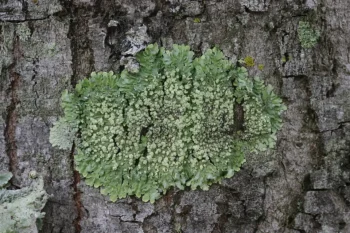
Dirinaria Lichen: The Crusty Garden Guest You Can’t Plant (But Should Appreciate)
If you’ve ever noticed grayish-white, crusty patches growing on the bark of trees in your yard, you might have encountered the dirinaria lichen (Dirinaria picta). This fascinating organism isn’t actually a plant at all – it’s a lichen, which makes it a unique partnership between fungi and algae living together in perfect harmony.
What Exactly Is Dirinaria Lichen?
Dirinaria picta, commonly known as dirinaria lichen, is a crusty (crustose) lichen that forms distinctive patches on tree bark and occasionally on rocks. You might also see it referred to by its scientific synonyms Physcia picta or Pyxine picta in older botanical references. This lichen creates a symbiotic relationship where the fungal partner provides structure and protection while the algal partner produces food through photosynthesis.
Where You’ll Find It
This lichen is native to North America and has quite an impressive range, stretching from southern Canada all the way down to Central America. It’s particularly fond of deciduous trees and can be found in various habitats from urban parks to deep forests.
What Does Dirinaria Lichen Look Like?
Identifying dirinaria lichen is easier than you might think:
- Forms crusty, patch-like growths that are firmly attached to bark
- Color ranges from grayish-white to pale green
- Creates somewhat circular or irregular patches
- Has a slightly rough, crusty texture (hence the name crustose)
- Typically found on the bark of hardwood trees
Is It Beneficial to Your Garden?
While you can’t exactly plant dirinaria lichen in your garden, its presence is actually a wonderful sign! Here’s why you should appreciate this crusty character:
- Air quality indicator: Lichens are sensitive to air pollution, so their presence suggests you have relatively clean air in your area
- Ecosystem health: They contribute to biodiversity and provide habitat for tiny insects and other microorganisms
- No harm to trees: Despite growing on bark, lichens don’t damage healthy trees – they’re just along for the ride
- Natural character: They add an authentic, aged appearance to garden trees and create visual interest
The Reality Check: You Can’t Grow It
Here’s the thing about dirinaria lichen – you can’t actually cultivate, plant, or grow it in the traditional gardening sense. Lichens establish themselves naturally when conditions are right, and they’re incredibly slow-growing. Trying to transplant or encourage lichen growth rarely works and isn’t recommended.
How to Support Lichen in Your Landscape
Instead of trying to plant lichens, focus on creating conditions where they can thrive naturally:
- Maintain mature trees with textured bark
- Avoid using harsh chemicals or pesticides near trees
- Support overall air quality in your area
- Be patient – lichens appear when they’re ready!
The Bottom Line
Dirinaria lichen might not be something you can add to your shopping cart at the garden center, but it’s definitely worth celebrating when it shows up naturally in your landscape. Consider it nature’s seal of approval for your garden’s environmental health. If you spot these crusty patches on your trees, take a moment to appreciate this ancient partnership between fungi and algae that’s been working successfully for millions of years.
So next time you’re strolling through your garden and notice these grayish-white patches, give a little nod of appreciation to your dirinaria lichen – the garden guest that invited itself and actually improved the neighborhood.