Disc Lichen: The Tiny Garden Helper You Never Knew You Had
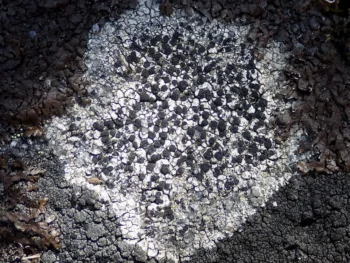
Have you ever noticed small, dark, disc-like spots dotting the bark of trees in your yard? Meet disc lichen (Buellia aethalia), a fascinating organism that’s probably been quietly living in your landscape all along. While you can’t exactly plant this little guy like you would a tomato or rose bush, understanding what it is and what it does might just change how you view these tiny garden residents.
What Exactly Is Disc Lichen?
First things first – disc lichen isn’t actually a plant at all! It’s a lichen, which is essentially a partnership between a fungus and algae working together in perfect harmony. Think of it as nature’s ultimate roommate situation, where both parties benefit from the arrangement. The fungus provides structure and protection, while the algae produces food through photosynthesis.
Buellia aethalia gets its common name from its distinctive appearance – small, dark, disc-shaped structures that look like tiny buttons scattered across tree bark. These discs are actually the lichen’s reproductive structures, called apothecia, where spores are produced.
Where You’ll Find Disc Lichen
This native North American species has made itself quite at home across various regions of the continent. You’re most likely to spot disc lichen growing on the bark of deciduous and coniferous trees, though it occasionally sets up shop on rocks or other hard surfaces.
Is Disc Lichen Good for Your Garden?
Here’s some great news – if you’ve got disc lichen in your yard, it’s actually a sign that you’re doing something right! Lichens are incredibly sensitive to air pollution, so their presence indicates that your local air quality is relatively clean. Consider them nature’s air quality monitors.
While disc lichen won’t attract butterflies or hummingbirds like flowering plants do, it does contribute to your garden’s ecosystem in subtle but important ways:
- Provides food for various small insects and invertebrates
- Creates microhabitats for tiny creatures
- Helps with nutrient cycling as it slowly breaks down organic matter
- Adds to the biodiversity of your landscape
How to Identify Disc Lichen
Spotting Buellia aethalia is easier than you might think once you know what to look for:
- Size: Individual patches are typically small, usually less than an inch across
- Color: Dark gray to blackish, sometimes with a slightly brownish tint
- Texture: Relatively smooth with raised, disc-like reproductive structures
- Location: Most commonly found on tree bark, particularly on the trunk and larger branches
- Pattern: Often appears in scattered patches rather than continuous coverage
Living Alongside Disc Lichen
The beauty of disc lichen is that it requires absolutely no maintenance from you – in fact, it prefers you leave it alone! These hardy little organisms have been perfecting their survival strategies for millions of years, long before humans started fussing with gardens.
If you want to encourage lichens like Buellia aethalia in your landscape, the best approach is to:
- Maintain good air quality around your property
- Avoid using harsh chemicals or pressure washing on tree bark
- Keep mature trees healthy, as they provide the best substrate
- Resist the urge to scrub or remove lichens – they’re not harming your trees!
The Bottom Line
While you can’t run to the nursery and pick up a flat of disc lichen for your weekend planting project, appreciating these tiny organisms can add a whole new dimension to your gardening experience. They’re living proof that some of the most interesting garden residents are the ones that show up uninvited and ask for nothing in return.
Next time you’re out in your yard, take a moment to look closely at your trees. Those little dark discs aren’t just random spots – they’re fascinating examples of nature’s ingenuity, quietly going about their business and contributing to the complex web of life that makes your garden ecosystem complete.