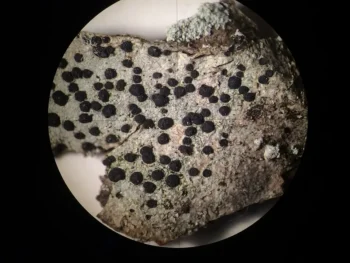
Disc Lichen: The Tiny Garden Helper You Never Knew You Had
Have you ever noticed small, crusty, disc-shaped patches on the bark of your trees or on garden stones? Meet the disc lichen (Buellia disciformis), one of nature’s most underappreciated garden residents. While you can’t exactly plant this fascinating organism like you would a flower or shrub, understanding what it is and why it matters can completely change how you view your outdoor space.
What Exactly Is Disc Lichen?
Disc lichen isn’t actually a plant at all – it’s a remarkable partnership between a fungus and algae working together as one organism. The fungus provides structure and protection, while the algae produces food through photosynthesis. Think of it as nature’s ultimate roommate situation, where everyone benefits!
This particular lichen species is native to North America and has been quietly doing its job in our landscapes for centuries. You might also see it referred to by its scientific name, Buellia disciformis, or occasionally by its synonym, Buellia parasema.
Where You’ll Find Disc Lichen
Disc lichen has a wide distribution across North America, thriving in areas with clean air and suitable growing surfaces. It’s particularly common in temperate regions where mature trees and natural stone surfaces provide the perfect foundation for growth.
How to Identify Disc Lichen in Your Garden
Spotting disc lichen is easier than you might think once you know what to look for:
- Small, circular or disc-shaped patches, typically 1-3 millimeters across
- Crusty, somewhat raised texture that feels rough to the touch
- Grayish to brownish coloration, sometimes with darker edges
- Found primarily on tree bark, especially older trees with textured bark
- May also appear on rocks, stones, or concrete surfaces
- Forms scattered colonies rather than continuous coverage
Is Disc Lichen Beneficial for Your Garden?
Absolutely! While disc lichen might seem insignificant, it’s actually providing several valuable services:
Air Quality Indicator: The presence of disc lichen is a great sign that your air quality is good. These sensitive organisms can’t tolerate pollution, so finding them means your garden environment is healthy.
Ecosystem Support: While disc lichen doesn’t directly attract pollinators like flowering plants do, it contributes to the overall biodiversity of your garden ecosystem. Some small insects and microscopic creatures use lichens as habitat.
Natural Beauty: Once you start noticing lichens, you’ll appreciate the subtle textures and patterns they add to tree bark and stone surfaces. They’re like living art that changes subtly with the seasons.
Growing Conditions and Care
Here’s the thing about disc lichen – you don’t really grow it in the traditional sense. It appears naturally when conditions are right, which includes:
- Clean air with minimal pollution
- Adequate moisture from rainfall or humidity
- Suitable surfaces like tree bark or stone
- Indirect light conditions
- Time – lichens are slow growers and may take years to establish
The best thing you can do to encourage disc lichen is to maintain a healthy garden environment. Avoid using harsh chemicals, preserve mature trees, and be patient. If your area has good air quality, disc lichen will likely find its way to your garden naturally.
Should You Be Concerned About Disc Lichen?
Not at all! Disc lichen is completely harmless to plants, trees, and humans. It doesn’t damage the bark it grows on – it simply uses it as a surface. In fact, finding disc lichen on your trees is usually a sign that both the lichen and the tree are healthy.
Some people worry that lichens are harming their trees, but this is a misconception. The lichen is just along for the ride, not causing any damage. If you see lichen on a declining tree, the tree’s problems are from other causes entirely.
The Bottom Line
Disc lichen might not be the showiest addition to your garden, but it’s certainly one of the most interesting. This native North American species serves as a living indicator of environmental health while adding subtle natural beauty to your landscape. Rather than trying to cultivate it, simply appreciate it when it appears and take its presence as a good sign that you’re maintaining a healthy outdoor space.
Next time you’re wandering through your garden, take a moment to look closely at the bark of your trees and the surfaces of your stones. You might just discover a whole world of disc lichens you never noticed before – and now you’ll know you’re looking at one of nature’s most successful partnerships!