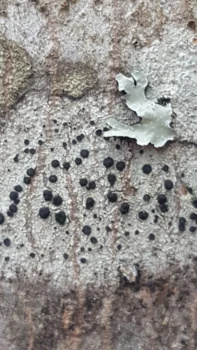
Disc Lichen: The Tiny Garden Guest You Never Invited (But Should Appreciate)
Have you ever noticed small, disc-like spots dotting the stone walls, garden rocks, or concrete surfaces around your property? Meet the disc lichen, scientifically known as Buellia erubescens – a fascinating little organism that’s been quietly making itself at home in North American gardens and landscapes for centuries.
What Exactly is Disc Lichen?
Here’s where things get interesting: disc lichen isn’t actually a plant at all! It’s a lichen – a remarkable partnership between a fungus and an algae that work together like the ultimate power couple. The fungus provides structure and protection, while the algae produces food through photosynthesis. It’s nature’s version of a perfect roommate situation.
This native North American species goes by the synonym Buellia zahlbruckneri J. Steiner in some scientific circles, but most of us will simply recognize it as those small, crusty patches that seem to appear on our garden stones and walls.
Where You’ll Find Disc Lichen
Disc lichen has made itself comfortable throughout North America, with a particular fondness for calcareous (limestone-rich) rocks and surfaces. You might spot it on:
- Garden stone walls and retaining walls
- Concrete surfaces and sidewalks
- Natural rock outcroppings
- Old monuments and statuary
- Limestone or concrete planters
How to Identify Disc Lichen
Spotting disc lichen is like playing nature’s version of Where’s Waldo, but once you know what to look for, you’ll see it everywhere:
- Appearance: Small, disc-shaped fruiting bodies (called apothecia) that look like tiny buttons
- Color: Ranges from grayish to brownish, sometimes with darker centers
- Texture: Crusty and somewhat rough to the touch
- Size: Individual discs are typically just a few millimeters across
- Growth pattern: Forms patches or scattered colonies on rock surfaces
Is Disc Lichen Beneficial to Your Garden?
While you can’t exactly plant disc lichen in your flower beds, its presence in your garden is actually a good sign! Here’s why you should appreciate these tiny tenants:
- Air quality indicator: Lichens are sensitive to air pollution, so their presence suggests your garden enjoys relatively clean air
- Ecosystem health: They contribute to biodiversity and support microscopic food webs
- Natural weathering: They help break down rock surfaces slowly, contributing to soil formation over geological time
- Visual interest: They add subtle texture and natural patina to stone surfaces
Should You Be Concerned?
The short answer is no! Disc lichen is neither invasive nor harmful to your garden or structures. While it does grow on stone and concrete surfaces, it’s not causing significant damage – think of it more like nature’s way of adding character to your hardscaping.
Some gardeners worry about lichen growth on stone walls or surfaces, but removal isn’t necessary and can actually be quite difficult. If you prefer the clean look of freshly installed stone, gentle cleaning with a soft brush and water can help, but expect the lichen to return over time.
Living with Your Lichen Neighbors
Since disc lichen isn’t something you plant or maintain, there’s really no care involved. It thrives in conditions with moderate moisture, good air circulation, and suitable rock surfaces. The best approach is simply to appreciate it as part of your garden’s natural ecosystem.
If you’re installing new stone features in your garden, don’t be surprised if disc lichen eventually makes an appearance. Consider it nature’s way of approving your landscape choices!
The Bottom Line
Disc lichen might not be the showiest addition to your garden, but it’s a fascinating example of nature’s ingenuity and a sign of a healthy outdoor environment. Rather than viewing it as something to eliminate, try seeing it as evidence that your garden is supporting a diverse range of life – even if some of that life comes in very small, crusty packages.
Next time you’re wandering through your garden, take a moment to appreciate these tiny marvels. They’ve been perfecting their rock-dwelling lifestyle for millions of years, and they’re not planning to leave anytime soon!