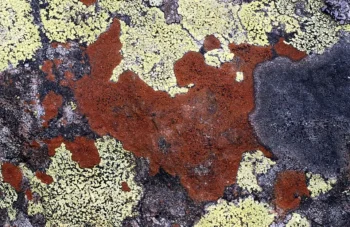
Disc Lichen: The Tiny Dark Spots That Add Character to Your Garden’s Rocky Features
Have you ever noticed small, dark, disc-like spots dotting the rocks in your garden or on that stone wall you’re so proud of? Meet the disc lichen, scientifically known as Tremolecia atrata – one of nature’s most understated yet fascinating organisms that might already be calling your outdoor space home.
What Exactly Is Disc Lichen?
Before we dive deeper, let’s clear up what disc lichen actually is. Unlike the plants you typically think of adding to your garden, lichens are remarkable partnerships between fungi and algae (or sometimes cyanobacteria). Think of them as nature’s ultimate roommates – the fungus provides structure and protection, while the algae produces food through photosynthesis. It’s a win-win arrangement that’s been working beautifully for millions of years!
Disc lichen gets its common name from its appearance: small, dark, disc-shaped structures that seem to grow right out of rock surfaces. These aren’t actually growing in the traditional sense – they’re slowly expanding colonies that can persist for decades or even centuries.
Where You’ll Find Disc Lichen
This hardy little organism is native to North America, particularly thriving in the northern regions including boreal and arctic areas. You might spot disc lichen naturally occurring on rocks, stone walls, concrete surfaces, and other hard substrates throughout these regions.
Identifying Disc Lichen in Your Garden
Spotting disc lichen is easier than you might think once you know what to look for:
- Small, dark (usually black or very dark brown) circular or disc-shaped structures
- Flat to slightly raised appearance on rock surfaces
- Typically ranges from a few millimeters to about a centimeter in diameter
- Often appears in clusters or scattered patterns across suitable surfaces
- Firmly attached to the substrate – they won’t easily brush off
Is Disc Lichen Beneficial for Your Garden?
While you can’t exactly plant disc lichen like you would a perennial, its presence in your garden is actually a wonderful sign! Here’s why you should appreciate these tiny dark spots:
- Air quality indicator: Lichens are sensitive to air pollution, so their presence suggests your garden enjoys relatively clean air
- Natural character: They add authentic, weathered character to stone features, walls, and rock gardens
- Ecosystem support: While small, they contribute to the overall biodiversity of your outdoor space
- Low maintenance beauty: Once established, they require absolutely no care from you
Can You Encourage Disc Lichen?
Here’s where disc lichen differs dramatically from your typical garden plants – you can’t really cultivate it in the traditional sense. These organisms establish themselves naturally when conditions are right. However, you can create an environment where they’re more likely to appear:
- Maintain clean air: Avoid using harsh chemicals or pollutants near stone features
- Provide suitable surfaces: Natural stone, aged concrete, and rough-textured rocks are ideal
- Be patient: Lichen establishment and growth is extremely slow – we’re talking years, not seasons
- Avoid disturbance: Once present, avoid cleaning or scrubbing the surfaces where they’ve established
Working with Disc Lichen in Your Landscape
If you’re lucky enough to have disc lichen naturally occurring in your garden, consider it a bonus feature rather than something to remove. These tiny organisms work particularly well in:
- Natural rock gardens and alpine settings
- Stone walls and retaining walls
- Pathway borders with stone elements
- Areas designed to mimic natural, undisturbed landscapes
The Bottom Line
Disc lichen isn’t a plant you’ll find at your local nursery, and that’s perfectly fine. Instead, think of it as nature’s way of adding authentic character to your garden’s hardscape features. If you spot these small dark discs on your rocks or stone walls, take a moment to appreciate them – you’re looking at one of nature’s most successful and enduring partnerships, quietly going about its business in your very own backyard.
Remember, the presence of disc lichen is actually a compliment to your garden’s environmental health. So next time you’re admiring your stone features, keep an eye out for these tiny dark spots – they might just be some of your garden’s most ancient and resilient residents!