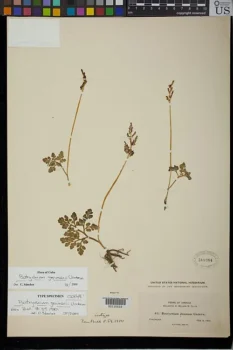
Dixie Grapefern: A Rare Native Treasure for Your Shade Garden
Meet the Dixie grapefern (Botrychium jenmanii), a small but fascinating native fern that’s quietly making its presence known across the southeastern United States. This little woodland dweller might not be the showiest plant in your garden, but it’s got character – and a story that makes it worth knowing about, even if you never actually grow one yourself.
What Exactly Is a Dixie Grapefern?
The Dixie grapefern is a perennial moonwort that belongs to the unique world of Botrychium ferns. Unlike your typical garden ferns with their classic frilly fronds, this species has a distinctly different look. It produces two types of fronds: a sterile leaf that’s triangular and divided, and a fertile spike that looks remarkably like a tiny bunch of grapes – hence the grapefern name!
You might also see this plant listed under its synonyms Botrychium alabamense or Sceptridium jenmanii in older botanical references, but Botrychium jenmanii is the accepted name today.
Where Does It Call Home?
This native beauty has quite the southern charm, naturally occurring across a swath of southeastern states including Alabama, Florida, Georgia, Kentucky, Louisiana, Maryland, Mississippi, North Carolina, South Carolina, Tennessee, and Virginia. It also extends its range to Puerto Rico, showing its preference for warmer climates.
- Species observed
- No observations
A Word of Caution: Rarity Matters
Here’s where things get serious: the Dixie grapefern is considered rare, with a global conservation status of S3S4 and an even more concerning S1 status in Alabama (meaning it’s critically imperiled there). This isn’t a plant you should be digging up from the wild or purchasing unless you’re absolutely certain it comes from responsibly propagated sources.
Is It Right for Your Garden?
While the Dixie grapefern might sound appealing for native plant enthusiasts, it’s honestly not the easiest garden companion. These specialized ferns have very particular needs and form complex relationships with soil fungi that are difficult to replicate in typical garden settings.
However, if you’re lucky enough to have the right conditions – and can source plants ethically – here’s what you need to know:
Growing Conditions and Care
- Light: Shade to partial shade – think woodland understory conditions
- Soil: Well-draining but consistently moist soil with rich organic matter
- Hardiness: Thrives in USDA zones 6-10 based on its natural distribution
- Habitat preferences: Depending on region, it can handle both wetland and upland conditions, showing remarkable adaptability
Garden Role and Design Ideas
If you do manage to grow Dixie grapefern successfully, it works beautifully as:
- Ground cover in native woodland gardens
- An accent plant in shade gardens focused on southeastern natives
- Part of a specialized fern collection
- A conversation starter for visitors interested in rare native plants
Wildlife and Ecological Benefits
While we don’t have extensive data on specific wildlife benefits, native ferns like the Dixie grapefern contribute to local ecosystems by providing habitat structure and supporting the complex web of soil organisms that many other plants depend on.
The Bottom Line
The Dixie grapefern is undeniably cool – a rare native with a unique appearance and an interesting story. But unless you’re an experienced native plant gardener with very specific conditions and access to ethically sourced plants, you might want to admire this one from afar. Instead, consider other native ferns that are easier to grow and more readily available, like Christmas fern or sensitive fern, which can give you that native woodland feel without the conservation concerns.
Sometimes the best way to appreciate a rare plant is to support its conservation in the wild rather than trying to bring it into our gardens. The Dixie grapefern is definitely one of those look but don’t touch treasures of the native plant world.