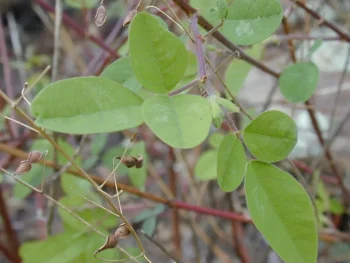
Dixie Ticktrefoil: A Fast-Growing Native Wildflower for Wildlife Gardens
If you’re looking for a native plant that grows quickly, feeds wildlife, and doesn’t demand much attention, dixie ticktrefoil (Desmodium tortuosum) might be just what your garden needs. This unassuming but hardworking wildflower has been quietly supporting birds and pollinators across the southeastern United States for generations.
What is Dixie Ticktrefoil?
Dixie ticktrefoil is a native annual or perennial forb that belongs to the legume family. Don’t let the technical term forb intimidate you – it simply means it’s a soft-stemmed flowering plant rather than a woody shrub or tree. This adaptable plant can grow surprisingly tall, reaching up to 9 feet in height with a rapid growth rate that makes it perfect for filling in bare spots quickly.
The plant produces small but conspicuous blue flowers during summer months, followed by brown seeds that persist through fall and winter. Its green compound leaves give it a delicate, feathery appearance that adds nice texture to naturalized areas.
Where Does Dixie Ticktrefoil Grow?
Dixie ticktrefoil is native to the southeastern United States, Puerto Rico, and the U.S. Virgin Islands. You’ll find it naturally growing in Alabama, Arkansas, Florida, Georgia, Louisiana, Mississippi, North Carolina, South Carolina, and Texas. The plant has also established itself in Hawaii, though it’s considered non-native there.
- Species observed
- No observations
Why Consider Growing Dixie Ticktrefoil?
This plant is a wildlife magnet, providing 10-25% of the diet for both water birds and terrestrial birds while also offering occasional cover. During its summer blooming period, the blue flowers attract native bees and butterflies, making it a valuable addition to pollinator gardens.
From a practical standpoint, dixie ticktrefoil is refreshingly low-maintenance. It fixes nitrogen in the soil (though at low levels), tolerates drought well once established, and grows rapidly to provide quick coverage. The plant thrives in USDA hardiness zones 8-11, making it suitable for most of the southeastern United States.
Growing Conditions and Care
One of the best things about dixie ticktrefoil is its adaptability. This plant accepts a wide range of growing conditions:
- Soil: Adapts to coarse, medium, or fine-textured soils with pH ranging from 5.0 to 7.2
- Water: Highly drought tolerant with low moisture requirements
- Sunlight: Prefers full sun (shade intolerant)
- Fertility: Low fertilizer requirements make it perfect for naturalized areas
- Temperature: Can handle temperatures as low as 17°F and needs at least 120 frost-free days
The plant’s wetland status varies by region – it can handle both wet and dry conditions in coastal areas but generally prefers upland sites in most regions.
How to Plant and Propagate
Dixie ticktrefoil is typically grown from seed, which is the most reliable propagation method. With approximately 200,640 seeds per pound and high seedling vigor, a little goes a long way. The seeds spread rapidly on their own once established.
Plant seeds in spring when soil temperatures warm up, as this plant has an active growing period during spring and summer. No special treatment like cold stratification is required – just scatter seeds in prepared soil and lightly cover.
Garden Design Ideas
Dixie ticktrefoil works best in informal, naturalized settings rather than formal garden beds. Consider using it in:
- Wildlife and pollinator gardens
- Meadow or prairie restorations
- Erosion control on slopes
- Background plantings where quick coverage is needed
- Native plant gardens focused on supporting local ecosystems
Things to Keep in Mind
While dixie ticktrefoil offers many benefits, it’s not suitable for every situation. The plant has low fire tolerance and doesn’t resprout after cutting, so it’s not ideal for areas that require regular maintenance or are prone to fires. It also doesn’t retain its leaves year-round, so don’t count on it for evergreen coverage.
If you’re gardening in Hawaii, consider that while this plant has naturalized there, you might want to explore native Hawaiian alternatives that provide similar wildlife benefits while supporting local ecosystems.
The Bottom Line
Dixie ticktrefoil may not be the showiest plant in your garden, but it’s definitely one of the hardest workers. Its combination of wildlife value, low maintenance requirements, and rapid establishment makes it an excellent choice for gardeners who want to support local ecosystems without a lot of fuss. Just give it sun, decent drainage, and room to grow – it’ll handle the rest.