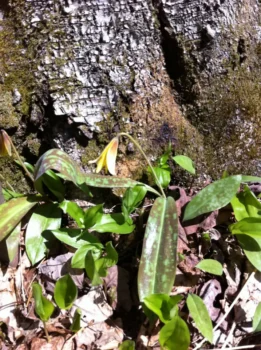
Dogtooth Violet: A Charming Native Spring Ephemeral for Your Shade Garden
If you’re looking to add some early spring magic to your woodland garden, the dogtooth violet (Erythronium americanum) might just be the perfect native plant for you. Don’t let the name fool you – this delightful perennial isn’t actually a violet at all, but rather a member of the lily family that brings cheerful yellow blooms to shady corners when most other plants are still sleeping.
What Makes Dogtooth Violet Special
This native North American beauty is what gardeners call a spring ephemeral – a plant that makes its grand entrance early in the season, puts on a spectacular show, then quietly retreats underground for the rest of the year. The dogtooth violet’s nodding yellow flowers with their distinctively recurved petals create an enchanting carpet of blooms in early spring, while its mottled green and brown leaves add interesting texture even before the flowers appear.
As a perennial forb, dogtooth violet lacks woody tissue but returns year after year from underground bulbs, gradually forming colonies that become more impressive with time.
Where Dogtooth Violet Calls Home
This native gem has an impressive range across eastern North America, naturally growing in states from Maine down to Georgia and west to Minnesota and Arkansas. You’ll also find it thriving in southeastern Canada, including New Brunswick, Nova Scotia, Ontario, Quebec, and Newfoundland. Its wide distribution speaks to its adaptability and resilience as a native species.
- Species observed
- No observations
Why Your Garden (and Local Wildlife) Will Love It
Dogtooth violet offers several compelling reasons to earn a spot in your landscape:
- Early pollinator support: When few other flowers are blooming, dogtooth violet provides crucial nectar and pollen for native bees, flies, and beetles emerging from winter
- Low maintenance: Once established, this native requires minimal care and naturalizes beautifully
- Woodland charm: Perfect for creating that coveted woodland garden aesthetic with authentic native plants
- Spring interest: Brings life and color to shade areas when most perennials are just emerging
- Native habitat restoration: Helps support local ecosystems and native wildlife populations
Is Dogtooth Violet Right for Your Garden?
This native beauty thrives in USDA hardiness zones 3-8, making it suitable for most temperate regions. It’s an excellent choice if you have:
- Partial to full shade areas that need spring interest
- Moist, well-draining, humus-rich soil
- A woodland or naturalized garden style
- Interest in supporting native pollinators
- Patience for a plant that may take a few years to establish
Keep in mind that dogtooth violet goes dormant by mid-summer, so it’s best planted alongside other woodland companions that can provide interest later in the season.
Growing Dogtooth Violet Successfully
Growing this native charmer is surprisingly straightforward once you understand its needs:
Planting
- Plant bulbs in fall, about 3-4 inches deep
- Space bulbs 4-6 inches apart for natural colonization
- Choose a location with partial to full shade
- Ensure soil drains well but retains moisture
Care and Maintenance
- Allow foliage to die back naturally – it feeds the bulb for next year’s show
- Apply a layer of leaf mulch annually to mimic forest floor conditions
- Water during dry spring periods, but avoid summer watering when dormant
- Divide overcrowded colonies every few years if desired
- Be patient – young plants may take 2-3 years to flower
Ideal Growing Conditions
Dogtooth violet performs best in conditions that mimic its native woodland habitat. It prefers moist, well-draining soil rich in organic matter, much like you’d find on a forest floor. While it can tolerate brief periods of spring sun before trees leaf out, it definitely needs summer shade to thrive.
The Bottom Line
Dogtooth violet is a wonderful choice for gardeners wanting to create authentic native landscapes while supporting local wildlife. Its early spring blooms provide crucial resources for pollinators, and its low-maintenance nature makes it perfect for naturalized settings. While it requires some patience and the right growing conditions, the reward of seeing these cheerful yellow blooms carpeting your woodland garden each spring makes it well worth the wait.
If you’re ready to welcome this native beauty into your garden, look for responsibly sourced bulbs from native plant specialists rather than wild-collected specimens. Your local ecosystem – and the early spring pollinators – will thank you for it!