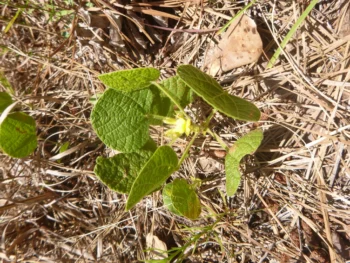
Dollarleaf: A Charming Native Ground Cover for Southern Gardens
If you’re looking for a delightful native plant that’s as practical as it is pretty, let me introduce you to dollarleaf (Rhynchosia reniformis). This unassuming little perennial might just become your new favorite ground cover, especially if you’re gardening in the Southeast and want to support local wildlife.
What Makes Dollarleaf Special?
Dollarleaf gets its charming common name from its distinctive kidney-shaped leaves that resemble tiny coins scattered across the ground. This native forb belongs to the legume family and produces small, bright yellow flowers that add cheerful pops of color to any garden space. As a perennial, it comes back year after year, making it a reliable addition to your landscape.
Where Does Dollarleaf Call Home?
This southeastern native has quite an impressive range across the lower 48 states. You’ll find dollarleaf growing naturally in Alabama, Florida, Georgia, Louisiana, Mississippi, North Carolina, South Carolina, Tennessee, and Texas. It’s perfectly adapted to the climate and growing conditions of these regions, making it an excellent choice for gardeners who want to work with nature rather than against it.
- Species observed
- No observations
Why Your Garden (and Local Wildlife) Will Love It
Here’s where dollarleaf really shines as a garden addition. While it may look modest, this little plant packs a punch when it comes to supporting local ecosystems. According to wildlife research, dollarleaf provides a valuable food source for:
- Large animals (contributing 5-10% of their diet)
- Small mammals (contributing 5-10% of their diet)
- Terrestrial birds (contributing 5-10% of their diet)
Plus, those sunny yellow flowers attract bees and other small pollinators, making your garden a buzzing hub of activity during blooming season.
Perfect Spots for Dollarleaf in Your Landscape
Dollarleaf works wonderfully as a ground cover in naturalized areas, woodland edges, and native plant gardens. It’s particularly well-suited for those spots where you want something low-maintenance that looks natural rather than overly manicured. Think of it as nature’s carpet – it spreads gently to fill in spaces while maintaining that wild, authentic look.
Growing Dollarleaf Successfully
The best part about growing native plants like dollarleaf? They’re typically much easier to care for than exotic species. Here’s what you need to know:
Ideal Growing Conditions
- Sunlight: Partial shade to full sun
- Soil: Well-drained, sandy soils (though it’s fairly adaptable)
- Hardiness zones: USDA zones 8-10
- Water needs: Drought tolerant once established
Planting and Care Tips
Getting dollarleaf established in your garden is refreshingly straightforward:
- Plant in spring after the last frost date
- Water regularly during the first growing season to help establish roots
- Once established, it’s quite drought tolerant and requires minimal care
- No need for fertilizers – as a legume, it actually helps improve soil nitrogen
- Allow it to spread naturally for best ground cover effect
Is Dollarleaf Right for Your Garden?
Dollarleaf is an excellent choice if you’re gardening in its native range and want a low-maintenance, wildlife-friendly ground cover. It’s perfect for gardeners who appreciate subtle beauty over flashy displays and want to create habitat for local wildlife. However, if you’re looking for a plant with showy, long-lasting blooms or dramatic foliage, you might want to consider other options.
The bottom line? Dollarleaf may be small in stature, but it’s big on benefits. It’s a wonderful way to add native character to your landscape while supporting the local ecosystem – and who doesn’t love a plant that practically takes care of itself once it’s happy?