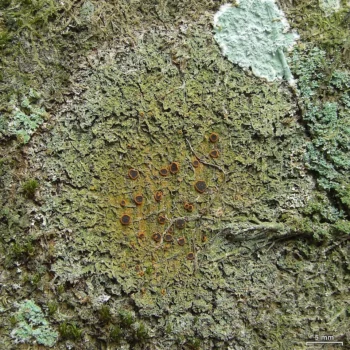
Meet the Domingan Letrouitia Lichen: A Fascinating Garden Visitor
If you’ve ever wondered about those crusty, colorful patches growing on rocks, trees, or even soil in your garden, you might have encountered a lichen! Today, let’s explore one particular species that calls North America home: the Domingan letrouitia lichen, scientifically known as Letrouitia domingensis.
What Exactly Is a Lichen?
Before we dive into our specific species, let’s clear up what lichens actually are. Despite their plant-like appearance, lichens aren’t plants at all! They’re fascinating partnerships between fungi and algae (or sometimes cyanobacteria) that work together in perfect harmony. The fungus provides structure and protection, while the algae produces food through photosynthesis. It’s like nature’s ultimate roommate situation!
Getting to Know Letrouitia domingensis
The Domingan letrouitia lichen is a native species to North America, though specific details about its exact range and distribution remain somewhat mysterious in the scientific literature. Like many lichens, this species has gone through some name changes over the years – you might also see it referred to by its former names Bombyliospora domingensis or Lopadium domingense in older field guides.
Is This Lichen Good for Your Garden?
Here’s the wonderful thing about finding lichens like Letrouitia domingensis in your garden – they’re actually excellent indicators of air quality! Lichens are incredibly sensitive to air pollution, so their presence suggests you have relatively clean air in your area. That’s definitely something to celebrate!
While you can’t exactly plant lichens like you would traditional garden plants, you can certainly welcome them when they appear naturally. They don’t harm the surfaces they grow on and add a unique, almost otherworldly beauty to garden spaces.
Creating Lichen-Friendly Conditions
If you’d like to encourage lichens to visit your garden naturally, consider these approaches:
- Maintain good air quality by avoiding chemical pesticides and fertilizers when possible
- Provide varied surfaces like rocks, old wood, or brick where lichens can establish
- Keep some areas of your garden less disturbed – lichens prefer stable environments
- Be patient! Lichens grow incredibly slowly, sometimes taking years to become noticeable
Identifying Lichens in Your Space
Spotting and identifying specific lichen species like Letrouitia domingensis can be quite challenging, even for experts. Lichens often require microscopic examination and chemical tests for definitive identification. If you’re curious about the lichens in your garden, consider:
- Taking photos and consulting with local naturalist groups
- Contacting your local university extension office
- Using citizen science apps like iNaturalist to get community help with identification
A Living Indicator of Garden Health
The presence of native lichens like Letrouitia domingensis in your garden is something to appreciate rather than worry about. These remarkable organisms have been quietly doing their thing for millions of years, slowly but steadily contributing to soil formation and providing food for various wildlife species.
So next time you spot what looks like a crusty patch on a rock or tree trunk, take a moment to appreciate these incredible partnerships between fungi and algae. You might just be looking at a Domingan letrouitia lichen – a small but significant piece of North America’s native biodiversity right in your own backyard!