Donnell’s Biscuitroot: A Hidden Gem for Native Plant Gardens
If you’re looking to add some early-season pizzazz to your native plant garden while supporting local pollinators, let me introduce you to a delightful little wildflower that might just become your new favorite: Donnell’s biscuitroot (Lomatium donnellii). This charming perennial herb might not win any beauty contests against flashy hybrid flowers, but it’s got something even better—it’s a hardworking native that knows exactly how to thrive in challenging conditions while feeding hungry pollinators when they need it most.
What Makes Donnell’s Biscuitroot Special?
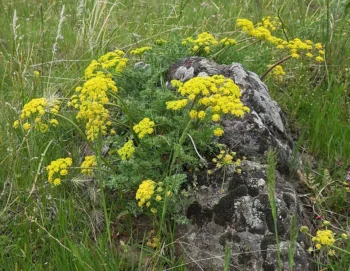
Donnell’s biscuitroot is a true native of the American West, calling home to parts of California, Idaho, Nevada, Oregon, and Washington. As a member of the carrot family, this perennial forb produces clusters of tiny yellow flowers arranged in umbrella-like formations called umbels. The blooms appear in early spring, often when many other plants are still snoozing, making it a crucial early-season nectar source.
The plant’s feathery, finely divided foliage gives it an almost fern-like appearance, creating an attractive backdrop even when it’s not in bloom. Don’t expect it to tower over your garden—this modest beauty typically reaches about 1 to 3 feet in both height and width, making it perfect for filling in gaps or creating natural-looking drifts.
- Species observed
- No observations
Why Your Garden (and Local Wildlife) Will Love It
Here’s where Donnell’s biscuitroot really shines: it’s like opening an early-bird diner for pollinators. When native bees, beneficial insects, and early butterflies emerge from winter, they’re often desperate for nectar sources. This little powerhouse delivers exactly when they need it most, typically blooming from March through May depending on your location.
From a gardening perspective, this plant is refreshingly low-maintenance once established. It’s drought-tolerant, deer-resistant, and doesn’t require the constant fussing that many garden plants demand. Plus, as a native species, it supports local ecosystems in ways that non-native plants simply can’t match.
Where Does It Fit in Your Landscape?
Donnell’s biscuitroot is incredibly versatile for the right gardens:
- Native plant gardens: A natural choice that pairs beautifully with other Pacific Northwest natives
- Rock gardens: Thrives in well-draining, rocky conditions
- Xeriscape designs: Perfect for water-wise landscaping
- Meadow plantings: Creates natural-looking drifts in larger spaces
- Pollinator gardens: Essential early-season support for native bees and butterflies
Growing Conditions and Care
The good news? Donnell’s biscuitroot isn’t particularly fussy, but it does have some preferences:
Sunlight: Full sun is best, though it can tolerate some light shade
Soil: Well-draining soil is absolutely crucial. This plant despises soggy conditions and will sulk (or worse, rot) if kept too wet. It actually prefers somewhat alkaline to neutral soil pH.
Water: Once established, it’s remarkably drought-tolerant. In fact, too much water can be its downfall.
Hardiness: Hardy in USDA zones 5-9, making it suitable for a wide range of climates
Planting and Propagation Tips
Here’s where things get a bit tricky (but not impossible!). Donnell’s biscuitroot is best grown from seed, and like many native plants, it has specific requirements:
- Timing: Sow seeds in fall for natural cold stratification over winter
- Pre-treatment: Seeds need cold, moist stratification for several months to germinate properly
- Direct seeding: Plant seeds directly where you want them to grow, as the taproot doesn’t like being disturbed
- Patience: This isn’t a plant for instant gratification—it may take a couple of years to become fully established
Once planted, resist the urge to coddle it with frequent watering. After the first year, natural rainfall should be sufficient in most areas within its native range.
The Bottom Line
Donnell’s biscuitroot might not be the showiest plant in your garden, but it’s definitely one of the most valuable. It’s a true team player—supporting local wildlife, requiring minimal care once established, and providing subtle beauty throughout the growing season. If you’re committed to native plant gardening and want to support early-season pollinators, this little gem deserves a spot in your landscape.
Just remember: good things come to those who wait, and native plants often reward patience with years of reliable, low-maintenance beauty. Give Donnell’s biscuitroot the well-draining soil and sunny spot it craves, and it’ll quietly become one of your garden’s most dependable performers.