Dot Lichen: The Tiny Garden Ally You Never Knew You Had
If you’ve ever taken a close look at the bark of trees in your yard, you might have noticed small, dark spots that look almost like someone took a fine-tip marker to the trunk. Meet dot lichen (Arthonia spadicea), one of nature’s most understated but fascinating organisms that’s probably already living in your landscape without you even knowing it!
What Exactly Is Dot Lichen?
Before we dive in, let’s clear up what we’re dealing with here. Dot lichen isn’t actually a plant at all – it’s a lichen! Think of lichens as nature’s ultimate partnership: a fungus and an algae (or sometimes a cyanobacterium) living together in perfect harmony. The fungus provides structure and protection, while the algae photosynthesizes and makes food. It’s like having the world’s most efficient roommate situation, but on tree bark.
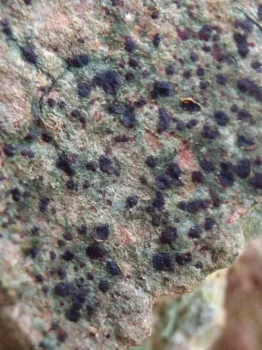
Dot lichen gets its common name from its appearance – it forms thin, dark patches on tree bark dotted with tiny, dark fruiting bodies called apothecia. These little dots are where the magic of reproduction happens, releasing spores to start new lichen colonies elsewhere.
Where Does Dot Lichen Call Home?
This native North American species has made itself quite comfortable across eastern regions of the continent. You’ll typically find it thriving in temperate deciduous forests, where it’s perfectly content living as an epiphyte on tree bark. Don’t worry – being an epiphyte just means it lives on other plants without harming them, like a friendly hitchhiker.
Is Dot Lichen Good for Your Garden?
Here’s where things get interesting! While you can’t exactly plant dot lichen (more on that in a moment), having it show up naturally in your landscape is actually a wonderful sign. Lichens are incredibly sensitive to air pollution, so their presence indicates that your local air quality is pretty good. Think of them as nature’s air quality monitors with no batteries required!
Dot lichen and its lichen cousins also contribute to the ecosystem in subtle but important ways:
- They help break down organic matter and contribute to soil formation over very long periods
- Some wildlife species use lichens for nesting materials
- They add to the biodiversity of your local ecosystem
- They create interesting visual texture on tree bark for those who appreciate nature’s finer details
How to Identify Dot Lichen
Spotting dot lichen is like playing nature’s version of Where’s Waldo, but once you know what to look for, you’ll start seeing it everywhere:
- Location: Look on the bark of deciduous trees, especially in areas with good air quality
- Appearance: Forms thin, dark grayish to blackish patches or crusts on bark
- Distinguishing feature: Small, dark, dot-like fruiting bodies (apothecia) scattered across the surface
- Texture: The surface appears relatively smooth but may have a slightly grainy texture
- Size: Individual patches are usually small, but they can merge to cover larger areas
Can You Grow Dot Lichen?
Here’s where we need to manage expectations – you can’t really grow dot lichen in the traditional gardening sense. Lichens are incredibly complex organisms that require very specific environmental conditions, and they grow extremely slowly. We’re talking decades to centuries slowly! There’s no seed packet or nursery plant for this one.
However, you can encourage lichens to thrive naturally in your landscape by:
- Maintaining good air quality around your property
- Avoiding unnecessary chemical treatments on trees
- Preserving mature trees where lichens are already established
- Creating habitat that supports the overall forest ecosystem
The Bottom Line
Dot lichen might not be the showstopper that wins garden tours, but it’s a fascinating example of the incredible diversity that exists right under our noses. If you spot these tiny dark dots on your trees, take a moment to appreciate that you’re looking at one of nature’s most successful partnerships – and a sign that your local environment is healthy enough to support these sensitive organisms.
Rather than trying to cultivate dot lichen, consider it a bonus feature of maintaining a healthy, diverse landscape. Focus on native plants that support your local ecosystem, keep your air clean, and let nature handle the lichen logistics. Sometimes the best gardening approach is simply creating the right conditions and letting the natural world do what it does best.