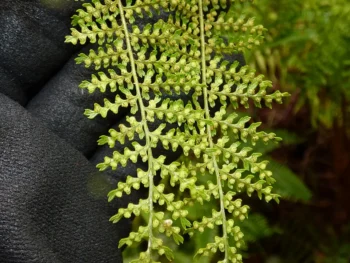
Dotted Beadfern: A Hidden Gem for Tropical Shade Gardens
If you’re looking to add some authentic Hawaiian charm to your tropical garden, let me introduce you to one of the islands’ most distinctive native ferns: the dotted beadfern (Hypolepis hawaiiensis). This delicate beauty might not be the flashiest plant in your garden, but it brings a unique elegance that’s hard to match.
Meet the Dotted Beadfern
The dotted beadfern is a perennial fern that’s completely native to Hawaii – you won’t find this little charmer growing wild anywhere else in the world! It gets its common name from the distinctive dotted pattern created by its sporangia (those are the tiny structures that contain spores) along the undersides of its fronds. It’s like nature decided to add polka dots to a fern – quirky and wonderful!
You might occasionally see this fern listed under an old scientific name, Hypolepis punctata, but botanists have since clarified that our Hawaiian species deserves its own unique identity as Hypolepis hawaiiensis.
Where You’ll Find It Growing Wild
This endemic beauty calls the Hawaiian Islands home, where it typically grows in partially shaded areas away from wetlands – botanists classify it as facultative upland, which means it usually prefers drier spots but can tolerate some moisture.
- Species observed
- No observations
Why Consider Dotted Beadfern for Your Garden?
Here’s the thing about native plants – they’re perfectly adapted to their local environment, which makes them generally easier to care for once established. The dotted beadfern brings several benefits to your landscape:
- Adds authentic Hawaiian character to native plant gardens
- Provides delicate texture and movement in shaded areas
- Requires less water than many non-native alternatives once established
- Creates naturalistic groundcover in tropical landscapes
- Supports local ecosystem health
Perfect Garden Spots
The dotted beadfern shines in specific garden settings:
- Shade gardens and woodland-style plantings
- Native Hawaiian plant collections
- Understory plantings beneath larger tropical plants
- Naturalistic landscapes that mimic Hawaiian forest floors
This fern works beautifully as a groundcover or accent plant, adding subtle texture without overwhelming other plants in your design.
Growing Conditions and Care
Like most ferns, the dotted beadfern has some specific preferences, but nothing too demanding:
Climate: This is definitely a warm-weather plant, thriving in USDA hardiness zones 10-12. If you’re not in a tropical or subtropical area, you’re probably out of luck for outdoor growing.
Light: Partial to full shade is ideal. Think dappled sunlight filtering through tree canopy – harsh direct sun will stress this delicate beauty.
Soil: Well-draining soil enriched with organic matter works best. While it can handle some moisture, it doesn’t want to sit in soggy conditions.
Water: Consistent moisture is key, but don’t overdo it. The soil should feel slightly damp, not waterlogged.
Planting and Care Tips
Getting your dotted beadfern established successfully:
- Plant in organic-rich, well-draining soil
- Choose a location with morning sun and afternoon shade, or filtered light all day
- Water regularly but allow soil to dry slightly between waterings
- Mulch around the base to retain moisture and suppress weeds
- Remove old or damaged fronds as needed to keep the plant looking tidy
A Word About Wildlife
While ferns don’t produce the nectar-rich flowers that attract pollinators, they play their own important role in the ecosystem. Native ferns like the dotted beadfern provide habitat and food sources for various insects and small creatures that are part of Hawaii’s natural food web.
Is Dotted Beadfern Right for Your Garden?
If you live in a tropical climate and want to create an authentic Hawaiian garden experience, the dotted beadfern could be a wonderful addition. It’s particularly perfect for gardeners who appreciate subtle beauty over flashy flowers and want to support native plant conservation.
However, this isn’t the fern for you if you’re looking for a fast-growing groundcover or something that thrives in full sun. It’s also not suitable for temperate climates – this Hawaiian native needs that tropical warmth to truly thrive.
The dotted beadfern may be modest in appearance, but it brings genuine island authenticity to your garden. In a world full of flashy exotic plants, sometimes the quiet natives are exactly what our landscapes need.