Dotted Duckmeat: The Tiny Native Aquatic That Packs a Big Punch
Meet dotted duckmeat (Landoltia punctata), one of North America’s smallest but most prolific native aquatic plants. Don’t let its diminutive size fool you – this tiny floating plant can transform your water garden faster than you can say pond coverage. But before you dive in, let’s explore whether this pint-sized powerhouse belongs in your aquatic landscape.
What Exactly Is Dotted Duckmeat?
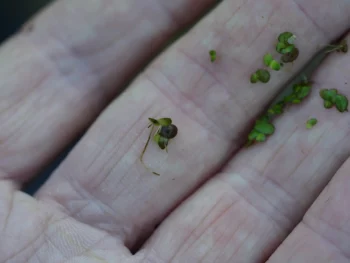
Dotted duckmeat is a perennial aquatic forb that spends its entire life floating on the water’s surface. Individual plants are absolutely tiny – we’re talking 1-5 millimeters in diameter – but what they lack in size, they make up for in numbers. The name dotted comes from the distinctive red-purple spots on the underside of each small, round frond. You might also encounter this plant under its former scientific names, Spirodela oligorrhiza or Spirodela punctata.
As a native species, dotted duckmeat has quite the impressive resume across North America. It’s naturally found throughout most of the continental United States and extends its range into Hawaii and Puerto Rico.
Where You’ll Find This Native Gem
Dotted duckmeat calls the following states and territories home: Alabama, Arizona, Arkansas, California, Delaware, District of Columbia, Florida, Georgia, Hawaii, Illinois, Kentucky, Louisiana, Maryland, Massachusetts, Mississippi, Missouri, North Carolina, Oklahoma, Oregon, Pennsylvania, South Carolina, Tennessee, Texas, Virginia, and Puerto Rico. That’s quite the cross-country presence!
- Species observed
- No observations
This widespread distribution tells us something important about dotted duckmeat: it’s incredibly adaptable. The plant thrives across USDA hardiness zones 3-11, making it one of the most cold-tolerant aquatic plants you can grow.
The Wetland Specialist
Here’s where things get interesting – dotted duckmeat is classified as an obligate wetland species across every region where it grows. This means it almost always occurs in wetlands and aquatic environments. You won’t find this little guy trying to colonize your flower beds; it’s 100% committed to life on the water.
Should You Invite Dotted Duckmeat to Your Garden?
The answer depends entirely on what you’re hoping to achieve and how much control you want over your aquatic space.
The Pros:
- Provides excellent water surface coverage, reducing algae by blocking sunlight
- Extremely hardy and low-maintenance once established
- Native species supporting local ecosystems
- Tolerates a wide range of water conditions and temperatures
- Perfect for naturalizing ponds and wetland restoration projects
- Helps oxygenate water and provides habitat for aquatic wildlife
The Cons:
- Spreads very rapidly and can quickly cover entire water surfaces
- Can be difficult to control once established
- May overwhelm smaller water features
- Minimal ornamental value due to tiny size
- Offers limited benefits to pollinators (flowers are microscopic and rare)
Best Garden Settings for Dotted Duckmeat
Dotted duckmeat shines in:
- Large, natural or naturalistic ponds
- Wetland restoration projects
- Wildlife habitat ponds
- Rain gardens with standing water
- Extensive water garden systems
Think twice about introducing it to small ornamental water features, koi ponds, or any aquatic space where you want precise control over plant coverage.
Growing Conditions and Care
The beauty of dotted duckmeat lies in its simplicity. This plant thrives in:
- Full sun to partial shade conditions
- Still or very slow-moving freshwater
- Wide pH range tolerance
- Water temperatures from near-freezing to quite warm
Once you introduce dotted duckmeat to suitable conditions, it essentially takes care of itself. The plant reproduces primarily through budding – new plants simply break off from the parent and float away to start their own colonies.
Planting and Management Tips
Getting started with dotted duckmeat is almost too easy – sometimes that’s the problem! Here’s what you need to know:
Introduction: You typically need only a small amount to get started. The plants will multiply rapidly under favorable conditions.
Management: The biggest challenge isn’t getting dotted duckmeat to grow – it’s controlling its enthusiasm. Regular harvesting may be necessary to prevent complete surface coverage. Some pond owners use it strategically, allowing coverage of 30-50% of their water surface for optimal balance.
Seasonal Care: In colder zones, plants will die back in winter but return from overwintering buds in spring. In warmer areas, growth continues year-round.
Wildlife and Ecosystem Benefits
While dotted duckmeat may not be a pollinator magnet, it serves important ecological functions. The dense mats provide shelter for small fish and aquatic invertebrates, while waterfowl occasionally browse on the plants. The surface coverage also helps maintain water quality by reducing algae growth and moderating water temperatures.
The Bottom Line
Dotted duckmeat is the aquatic equivalent of that friend who’s incredibly helpful but doesn’t know when to stop helping. It’s a fantastic native plant for the right situation – think large, natural water bodies or extensive wetland gardens where rapid coverage is actually desired. However, it’s probably not the best choice for small, manicured water features where you want to maintain precise aesthetic control.
If you’re creating a wildlife habitat pond or working on wetland restoration, dotted duckmeat could be exactly what you need. Just remember: a little goes a very long way, and once you invite this tiny native to the party, it’s likely to stick around for the long haul.