Douglas-fir: The Majestic Native Conifer That Commands Respect (and Space!)
If you’ve ever dreamed of having a towering forest giant in your backyard, meet the Douglas-fir (Pseudotsuga menziesii) – a true heavyweight champion of North American conifers. This isn’t your average garden-variety evergreen; we’re talking about a tree that can reach 200 feet tall and live for centuries. Before you start planning where to plant one, let’s dive into what makes this native beauty both spectacular and, well, a bit of a space hog.
A True North American Native
The Douglas-fir is as American as apple pie, naturally ranging across an impressive swath of the continent. You’ll find this perennial evergreen calling home to states and provinces from British Columbia and Alberta down to California and across to the Rocky Mountain states including Colorado, Montana, Idaho, Utah, Wyoming, Arizona, Nevada, and New Mexico. Surprisingly, it also pops up in some unexpected eastern locations like Minnesota, New York, New Jersey, Pennsylvania, and even Texas.
- Species observed
- No observations
What Makes Douglas-fir Special
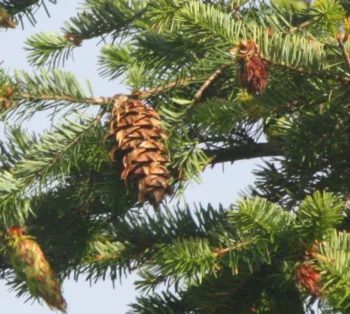
This isn’t just any old pine tree (though technically, it’s not even a true fir!). Douglas-fir sports a distinctive conical shape when young that gradually develops into a more columnar form with age. The needles are flat and spiral around the branches, creating a lush, dense canopy year-round. But perhaps the most charming feature is the tree’s unique cones with their distinctive three-pronged bracts that look like tiny mouse hindquarters and tails peeking out – nature’s little joke!
The bark develops into attractive reddish-brown furrows as the tree matures, adding winter interest to the landscape. With a moderate growth rate, you can expect your Douglas-fir to reach about 40 feet in 20 years, eventually maturing to its full towering potential.
The Big Question: Should You Plant One?
Here’s where we need to have an honest conversation. Douglas-fir is absolutely magnificent – if you have the space for it. This tree is perfect for:
- Large properties with room to grow
- Rural or suburban settings
- Creating natural windbreaks
- Establishing privacy screens (give it time!)
- Naturalized woodland gardens
- Mountain or forest-style landscapes
However, think twice if you’re working with a small urban lot or close neighbors. A mature Douglas-fir can dominate a landscape, and its dense foliage creates significant shade year-round.
Growing Conditions: What Douglas-fir Craves
Douglas-fir is surprisingly particular about its living conditions. This tree thrives in USDA hardiness zones 4-6 and prefers:
- Well-draining, coarse to medium-textured soils
- Slightly acidic to neutral pH (5.0-7.5)
- Medium moisture levels – not too wet, not too dry
- At least 18 inches of annual precipitation
- Full sun to partial shade (intermediate shade tolerance)
- Protection from strong winds when young
The tree has low drought tolerance, so consistent moisture is key, especially during establishment. It’s also not fans of heavy clay soils or extremely alkaline conditions.
Planting and Care Tips
If you’ve decided to take the Douglas-fir plunge, here’s how to set your tree up for success:
- Timing: Plant in early spring or fall when temperatures are moderate
- Location: Choose a spot with plenty of room – think decades ahead!
- Soil prep: Ensure excellent drainage; amend heavy soils with organic matter
- Watering: Keep consistently moist but not waterlogged, especially the first few years
- Fertilizing: Medium fertility requirements; a balanced slow-release fertilizer in spring helps young trees
- Mulching: Apply 2-3 inches of organic mulch around the base, keeping it away from the trunk
Seeds require cold stratification, so if you’re growing from seed, plan for a winter chill period. The good news? Douglas-fir is routinely available from nurseries, typically sold as container or bare-root specimens.
Wildlife and Ecological Benefits
While Douglas-fir may not be a pollinator magnet (it’s wind-pollinated), it’s an ecological powerhouse. The dense evergreen foliage provides year-round shelter and nesting sites for birds, while the seeds feed various wildlife species. As a native species, it supports local ecosystems and food webs in ways that non-native alternatives simply can’t match.
The tree typically grows in upland areas rather than wetlands, making it suitable for most well-draining garden sites.
The Bottom Line
Douglas-fir is a spectacular native tree that can be the crown jewel of the right landscape. If you have the space, patience, and appropriate growing conditions, this long-lived beauty will reward you with decades of majestic presence. Just remember – this is a commitment tree. Plant it where it can spread its wings (or should we say branches?) and grow into the forest giant it’s meant to become.
For smaller spaces, consider native alternatives like Eastern Red Cedar or various pine species that offer evergreen beauty without quite the same space requirements. But if you can accommodate a Douglas-fir, you’ll be creating a legacy tree that future generations will appreciate!