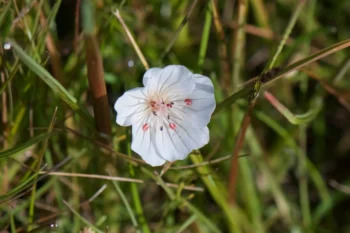
Douglas’ Meadowfoam: A Delightful California Native for Seasonal Gardens
If you’re looking to add a touch of whimsical charm to your California garden, Douglas’ meadowfoam (Limnanthes douglasii rosea) might just be the perfect native plant for you. This cheerful annual creates carpets of white flowers tipped with rosy pink, bringing a fairy-tale quality to gardens from late winter through spring.
What Makes Douglas’ Meadowfoam Special
Douglas’ meadowfoam is a California native annual that belongs to the meadowfoam family. As a forb (a non-woody flowering plant), it grows close to the ground and produces masses of small, cup-shaped flowers that seem to float above delicate, divided foliage. The flowers are particularly striking with their white petals that blush pink or rose at the tips, creating a soft, romantic effect in the landscape.
Where It Grows Naturally
This lovely native is found exclusively in California, where it grows naturally in vernal pools, wet meadows, and other seasonally moist areas. It’s perfectly adapted to California’s Mediterranean climate, thriving in the wet winter and spring months before going dormant during the dry summer season.
- Species observed
- No observations
Why Grow Douglas’ Meadowfoam in Your Garden
There are several compelling reasons to consider adding this native beauty to your landscape:
- Pollinator magnet: The flowers attract native bees and other beneficial insects, supporting local ecosystems
- Low maintenance: Once established, it requires minimal care and will often self-seed
- Unique seasonal interest: Provides beautiful spring color in areas that might otherwise be bare
- Perfect for challenging spots: Thrives in areas that are wet in winter but dry in summer
- Native plant benefits: Supports local wildlife and requires no supplemental water once established
Important Conservation Note
Douglas’ meadowfoam has a conservation status that suggests it may be somewhat uncommon in parts of its range. If you choose to grow this plant, please make sure to source seeds or plants from reputable native plant nurseries that use responsibly collected material. Never collect seeds from wild populations.
Growing Conditions and Care
This meadowfoam is surprisingly easy to grow if you can provide the right conditions:
- Climate zones: Best suited for USDA zones 8-10, matching California’s mild winter regions
- Moisture needs: Requires consistent moisture from fall through spring, then tolerates summer drought
- Soil preferences: Grows well in clay or heavy soils that retain winter moisture
- Sun exposure: Prefers full sun to partial shade
- Seasonal nature: Emerges with fall rains, blooms in spring, then dies back in summer
Planting and Propagation Tips
The easiest way to establish Douglas’ meadowfoam is through direct seeding:
- Scatter seeds in fall before the first rains arrive
- Seeds need the cool, moist conditions of winter to germinate properly
- No need to cover seeds deeply – just press them lightly into the soil surface
- Once established, plants will often self-seed for the following year
- Works well when seeded with other native wildflowers for a natural meadow effect
Design Ideas and Garden Placement
Douglas’ meadowfoam works beautifully in several garden settings:
- Rain gardens: Perfect for areas that collect winter runoff
- Native plant gardens: Combines well with other California natives
- Seasonal displays: Creates stunning spring carpets in otherwise unused spaces
- Naturalized areas: Ideal for creating meadow-like plantings
- Pollinator gardens: Provides early nectar sources for beneficial insects
What to Expect Through the Seasons
Understanding this plant’s seasonal cycle will help you appreciate its unique beauty:
- Fall: Seeds germinate with first rains, small rosettes appear
- Winter: Plants grow slowly, developing divided foliage
- Spring: Spectacular bloom period with masses of pink-tipped white flowers
- Summer: Plants complete their lifecycle and disappear until fall
The Bottom Line
Douglas’ meadowfoam is a charming choice for California gardeners who want to support native plants and create seasonal interest in their landscapes. While it requires specific growing conditions and responsible sourcing due to its conservation status, the reward of spring carpets covered in delicate pink-tipped flowers makes it well worth the effort. Just remember that this is a plant for patient gardeners who appreciate the rhythm of California’s natural seasons – sometimes the most beautiful things are worth waiting for!