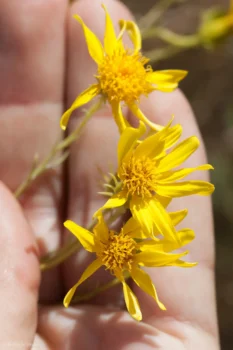
Douglas’ Ragwort: A Hardy Native Perennial for Western Gardens
If you’re looking for a resilient native plant that can handle tough conditions while adding delicate beauty to your landscape, Douglas’ ragwort might just be the perfect addition to your garden. This charming perennial herb has been quietly thriving across the American West for centuries, and it’s ready to bring its understated elegance to your outdoor space.
Meet Douglas’ Ragwort
Douglas’ ragwort (Senecio flaccidus var. douglasii) is a native perennial herb that belongs to the sunflower family. You might also see it referenced by its botanical synonyms, including Senecio douglasii. As a forb herb, this plant maintains a non-woody structure while developing a perennial root system that allows it to return year after year.
Where Does It Call Home?
This hardy native has established itself across several western states, including California, Colorado, and Kansas. As a plant species native to the lower 48 states, Douglas’ ragwort has adapted to diverse climatic conditions across its range, making it a versatile choice for native plant enthusiasts.
- Species observed
- No observations
Why Choose Douglas’ Ragwort for Your Garden?
There are several compelling reasons to consider adding this native beauty to your landscape:
- Native Heritage: By planting Douglas’ ragwort, you’re supporting local ecosystems and preserving regional plant diversity
- Low Maintenance: As a native species, it’s naturally adapted to local growing conditions, requiring less water and care once established
- Perennial Reliability: This long-lived perennial will return year after year, providing consistent garden structure
- Wildlife Support: Native plants like Douglas’ ragwort play important roles in supporting local wildlife and pollinators
Garden Design and Landscape Role
Douglas’ ragwort works beautifully in naturalized gardens, prairie restorations, and xeriscaping projects. Its herbaceous nature makes it an excellent choice for mixed perennial borders where you want to incorporate native species alongside other drought-tolerant plants. The plant’s modest stature and delicate appearance make it perfect for adding texture and seasonal interest without overwhelming other garden elements.
Growing Conditions and Care
While specific growing condition details for this variety aren’t extensively documented, Douglas’ ragwort typically thrives in:
- Well-draining soils
- Full sun to partial shade locations
- Areas with minimal supplemental watering once established
- Native plant gardens and naturalized landscapes
As with most native plants, Douglas’ ragwort is generally low-maintenance once established. The key to success is mimicking its natural habitat conditions and avoiding overwatering, which can be detrimental to many native western species.
A Note on Conservation
Douglas’ ragwort has a Global Conservation Status of S5T3T4, indicating varying levels of security across its range. While not critically endangered, this status reminds us of the importance of supporting native plant populations through responsible gardening practices. When sourcing Douglas’ ragwort for your garden, always purchase from reputable native plant nurseries that ethically propagate their stock rather than wild-harvesting.
Planning Your Native Garden
Douglas’ ragwort pairs beautifully with other native western plants and can be incorporated into drought-tolerant landscapes, prairie gardens, and restoration projects. Consider combining it with native grasses and other regional wildflowers to create an authentic, low-maintenance landscape that celebrates your local ecosystem.
Whether you’re just beginning your native plant journey or you’re a seasoned native gardener, Douglas’ ragwort offers the perfect combination of beauty, resilience, and ecological value. By choosing this native perennial, you’re not just adding a plant to your garden – you’re participating in the preservation and celebration of America’s natural heritage.