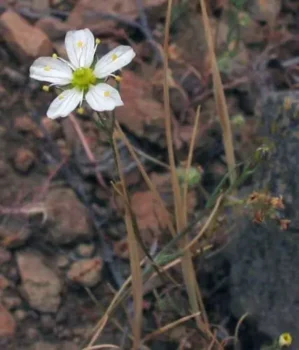
Douglas’ Stitchwort: A Delicate Native Gem for Specialized Gardens
If you’re drawn to the subtle beauty of tiny wildflowers and love a good gardening challenge, Douglas’ stitchwort (Minuartia douglasii) might just be the perfect plant for your specialized garden space. This diminutive native annual brings understated elegance to rock gardens and drought-tolerant landscapes across the western United States.
What is Douglas’ Stitchwort?
Douglas’ stitchwort is a small annual forb—essentially a non-woody flowering plant that completes its entire life cycle in one growing season. Don’t let its delicate appearance fool you; this little survivor has adapted to some pretty tough growing conditions in its native range.
You might also encounter this plant listed under its former scientific names, including Arenaria douglasii, though botanists have since reclassified it into the Minuartia genus. The plant world loves a good name shuffle now and then!
Where Douglas’ Stitchwort Calls Home
This charming native is naturally found across Arizona, California, and Oregon, making it a true child of the American West. It’s perfectly adapted to the region’s unique climate patterns and soil conditions.
- Species observed
- No observations
The Visual Appeal: Small but Mighty
Douglas’ stitchwort may not win any awards for size, but it makes up for it with delicate charm. The plant produces tiny white flowers, each sporting five pristine petals that seem to glow against the plant’s needle-like foliage. When grown in groups, these plants form lovely low mats or cushions that add texture and subtle color to specialized garden spaces.
Why Grow Douglas’ Stitchwort?
Here’s where things get interesting—and honest. This isn’t your typical easy-care beginner plant. Douglas’ stitchwort is more of a specialist’s dream, perfect for gardeners who:
- Love supporting native plant populations
- Enjoy the challenge of growing unique, less common species
- Want authentic western natives for rock or alpine gardens
- Appreciate subtle, delicate beauty over flashy displays
- Are creating drought-tolerant landscapes with character
Perfect Garden Situations
Douglas’ stitchwort thrives in specialized settings rather than traditional flower beds. Consider it for:
- Rock gardens with excellent drainage
- Alpine or mountain-themed landscapes
- Xeriscaping projects featuring native plants
- Naturalized wildflower areas
- Containers with specialized growing medium
Growing Conditions: Getting It Right
Success with Douglas’ stitchwort comes down to mimicking its natural habitat. This plant is typically hardy in USDA zones 5-9, but the key factors are:
- Drainage is king: Sandy or rocky, fast-draining soil is absolutely essential
- Sun exposure: Full sun to partial shade works well
- Water needs: Drought tolerant once established; avoid overwatering
- Soil type: Poor to moderately fertile soils; rich garden soil may actually harm it
Planting and Care Tips
Growing Douglas’ stitchwort successfully requires some patience and attention to detail:
- Start from seed: This annual is typically grown from seed rather than transplants
- Timing matters: Sow seeds in fall or early spring to align with natural germination patterns
- Drainage prep: Amend heavy soils with sand, gravel, or pumice to improve drainage
- Water wisely: Keep soil lightly moist during germination, then reduce watering significantly
- Minimal fertilization: These plants prefer lean conditions—skip the fertilizer
Wildlife and Pollinator Benefits
While small, Douglas’ stitchwort’s flowers attract tiny pollinators including small native bees and flies. The plant also provides habitat and food sources for specialized insects adapted to these native plant communities. As an annual, it contributes to the complex web of relationships in native ecosystems.
Is Douglas’ Stitchwort Right for Your Garden?
This plant isn’t for everyone, and that’s perfectly okay! Douglas’ stitchwort is ideal for gardeners who appreciate native plants, enjoy specialized growing challenges, and have the right growing conditions. If you’re looking for low-maintenance color or have heavy clay soil, you might want to consider other native options better suited to your situation.
However, if you’re creating an authentic western native garden, love supporting local ecosystems, and have well-draining soil, Douglas’ stitchwort could be a wonderful addition to your plant palette. Just remember—this little beauty rewards patience and attention to its specific needs with delicate charm that’s uniquely its own.