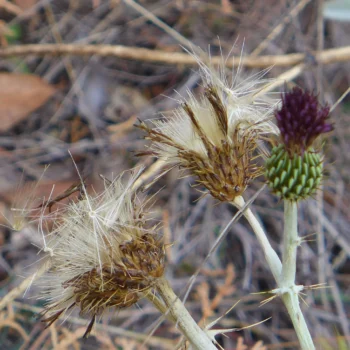
Douglas’ Thistle: A Native Wetland Beauty for Your Garden
If you’ve been searching for a native plant that can handle soggy soils while providing stunning blooms and wildlife habitat, Douglas’ thistle (Cirsium douglasii) might just be your new best friend. This distinctive western native brings both beauty and ecological value to wetland gardens and naturalized landscapes.
What is Douglas’ Thistle?
Douglas’ thistle is a native forb – essentially a non-woody flowering plant – that can live as either a biennial or perennial depending on growing conditions. Unlike its woody cousins, this plant lacks significant woody tissue and keeps its growing points at or below ground level, helping it survive through challenging seasons.
As a true American native, Douglas’ thistle naturally occurs across the western United States, specifically in California, Nevada, and Oregon. This plant has earned its place in the native flora of these states over thousands of years.
- Species observed
- No observations
Why Consider Douglas’ Thistle for Your Garden?
There are several compelling reasons why Douglas’ thistle deserves a spot in the right garden:
- Wetland specialist: This plant thrives in consistently moist to wet conditions, making it perfect for rain gardens, bog gardens, or areas with poor drainage
- Pollinator magnet: The purple-pink thistle flowers are rich in nectar, attracting butterflies, native bees, and other beneficial insects
- Native credentials: Supporting local ecosystems by choosing plants that naturally belong in your region
- Low maintenance: Once established in suitable conditions, native plants typically require less intervention than non-natives
Where Does Douglas’ Thistle Fit in Your Landscape?
This native thistle works beautifully in several garden styles:
- Wetland restoration projects: Perfect for recreating natural wetland habitats
- Native plant gardens: Adds authentic regional character
- Rain gardens: Handles periodic flooding and standing water
- Wildlife habitat gardens: Provides food and shelter for native species
Growing Conditions and Care
The key to success with Douglas’ thistle lies in understanding its natural habitat preferences:
Moisture requirements: This plant is classified as an obligate wetland species in both the Arid West and Western Mountains regions, meaning it almost always occurs in wetlands. Your Douglas’ thistle will need consistently moist to wet soils – think bog-like conditions rather than well-draining garden beds.
Light requirements: Full sun to partial shade works well, though full sun typically produces the most robust blooms.
Climate adaptation: Based on its native range, Douglas’ thistle is likely hardy in USDA zones 7-10, making it suitable for mild to moderate climates.
Planting and Establishment Tips
Getting Douglas’ thistle established successfully requires attention to its specific needs:
- Choose a location with naturally moist soil or plan to provide consistent irrigation
- Consider creating a rain garden or bog garden if you don’t have naturally wet areas
- Plant in spring after the last frost for best establishment
- Be patient – as with many native plants, establishment may take a full growing season
Is Douglas’ Thistle Right for Your Garden?
Douglas’ thistle is an excellent choice if you have wet or poorly draining areas that challenge other plants. It’s particularly valuable for gardeners interested in native plant gardening, wetland restoration, or creating habitat for local wildlife.
However, this plant may not be suitable if you have typical garden conditions with well-draining soil, as it specifically requires wetland conditions to thrive. Additionally, like all thistles, it may have spiny characteristics that require careful placement away from high-traffic areas.
For gardeners in California, Nevada, and Oregon looking to support local ecosystems while solving wet soil challenges, Douglas’ thistle offers a beautiful, ecologically appropriate solution that connects your garden to the natural heritage of the American West.