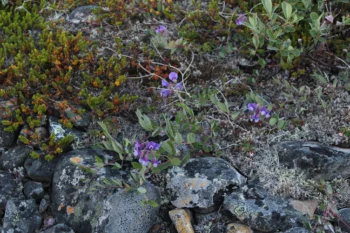
Downy Beach Pea: A Hardy Arctic Beauty for Northern Gardens
If you’re gardening in the far north and looking for a tough, beautiful native plant that can handle whatever nature throws at it, meet the downy beach pea (Lathyrus japonicus var. pubescens). This remarkable perennial forb is nature’s answer to extreme gardening challenges, bringing delicate purple-pink flowers to some of the world’s harshest growing conditions.
What Makes Downy Beach Pea Special?
Don’t let the name fool you – while it’s called a pea, this isn’t something you’ll be adding to your dinner plate. Instead, the downy beach pea is a wild relative of garden peas that has evolved to thrive in coastal Arctic environments. As a perennial forb (a non-woody flowering plant), it returns year after year, gradually spreading to form attractive ground cover.
This plant goes by the scientific name Lathyrus japonicus var. pubescens, and you might occasionally see it listed under its synonym Lathyrus maritimus Bigelow ssp. pubescens in older gardening references.
Where Does It Grow Naturally?
The downy beach pea is native to the coastal regions of Alaska and northern Canada, specifically thriving in Alaska and Yukon territories. This is a plant that has mastered life in some of North America’s most challenging climates, making it an excellent choice for gardeners in these regions who want to work with nature rather than against it.
- Species observed
- No observations
Why Consider Growing Downy Beach Pea?
There are several compelling reasons why northern gardeners should consider this native beauty:
- Extreme hardiness: Hardy in USDA zones 1-4, this plant laughs at temperatures that would kill most garden plants
- Low maintenance: Once established, it requires minimal care and is naturally adapted to local conditions
- Pollinator support: The purple-pink pea-like flowers attract bees and other native pollinators
- Erosion control: Its trailing growth habit helps stabilize soil, making it perfect for slopes or coastal areas
- Salt tolerance: Can handle salt spray, making it ideal for coastal gardens
- Authentic native landscaping: Helps create genuinely local plant communities
Garden Design Ideas
The downy beach pea works beautifully in several garden styles:
- Coastal gardens: Perfect for seaside properties where salt tolerance is crucial
- Rock gardens: Its trailing habit looks natural cascading over rocks
- Native plant gardens: An essential component of authentic northern native landscapes
- Ground cover applications: Excellent for covering difficult slopes or areas where grass won’t grow
- Naturalistic plantings: Ideal for creating wild, meadow-like areas
Growing Conditions and Care
One of the best things about downy beach pea is how easy it is to grow – if you’re in the right climate zone. Here’s what it needs:
- Sunlight: Full sun exposure for best flowering
- Soil: Well-draining, sandy soils (mimics its natural beach habitat)
- Water: Drought tolerant once established; avoid overwatering
- Climate: Thrives in extremely cold conditions (zones 1-4)
- Salt exposure: Tolerates and even benefits from occasional salt spray
Planting and Care Tips
Getting started with downy beach pea is straightforward:
- Plant in spring after the last frost, though this hardy plant can handle late cold snaps
- Choose a sunny location with sandy or well-draining soil
- Space plants about 12-18 inches apart to allow for spreading
- Water regularly during the first growing season to help establish roots
- Once established, minimal watering is needed – this plant prefers to stay on the dry side
- No fertilization needed; it’s adapted to nutrient-poor soils
- Allow it to spread naturally for best ground cover effect
Is This Plant Right for Your Garden?
The downy beach pea is an excellent choice if you garden in Alaska or northern Canada and want a truly native, low-maintenance plant that supports local ecosystems. However, it’s important to note that this plant is specifically adapted to very cold climates and won’t thrive in warmer regions.
If you’re outside its native range, consider looking for native beach peas or similar legumes that are adapted to your specific region instead. Every area has its own native pea family members that can provide similar benefits while being perfectly suited to local conditions.
For northern gardeners lucky enough to be in this plant’s natural range, the downy beach pea represents an opportunity to create beautiful, sustainable landscapes that celebrate the unique character of Arctic and subarctic regions. It’s a reminder that some of the most resilient and beautiful plants are often right in our own backyard – or in this case, right on our own beaches.