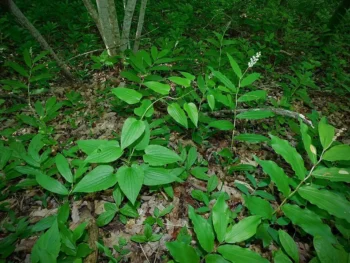
Downy Carrionflower: A Native Ground Cover with Character
If you’re looking for a native ground cover that’s a little different from the usual suspects, meet the downy carrionflower (Smilax pulverulenta). This unassuming perennial herb might not win any beauty contests, but it brings its own unique charm to woodland gardens and naturalized landscapes across much of eastern North America.
What Makes Downy Carrionflower Special
Don’t let the name fool you – while it’s called carrionflower, this plant doesn’t actually smell bad like some of its relatives. The downy part of its name comes from the soft, powdery coating on the undersides of its heart-shaped leaves, which gives them a distinctive silvery appearance when the wind catches them just right.
As a member of the Smilax family, downy carrionflower is technically a forb or herb – meaning it’s a vascular plant without significant woody tissue. It grows as a low, trailing or climbing vine that spreads along the ground or climbs over low vegetation using small tendrils.
Where It Grows Naturally
Downy carrionflower is native to a impressive swath of the eastern United States, calling home to 25 states from Minnesota and Michigan in the north down to Mississippi and Georgia in the south, and from Kansas in the west to the Atlantic coast. You’ll find it growing naturally in states including Alabama, Arkansas, Delaware, Georgia, Illinois, Indiana, Kansas, Kentucky, Maryland, Michigan, Minnesota, Mississippi, Missouri, New Jersey, New York, North Carolina, Ohio, Pennsylvania, Rhode Island, South Carolina, Tennessee, Virginia, and West Virginia, plus the District of Columbia.
- Species observed
- No observations
A Note About Rarity
While downy carrionflower has a broad native range, it’s worth noting that in some areas like New Jersey, it has a rarity status and is considered uncommon. If you’re interested in adding this plant to your garden, make sure to source it responsibly from reputable native plant nurseries rather than collecting it from the wild.
Garden Appeal and Landscape Role
Let’s be honest – downy carrionflower isn’t going to be the star of your flower border. Its small, greenish flowers are pretty inconspicuous, blooming in late spring to early summer. But what it lacks in showy blooms, it makes up for in other ways:
- The heart-shaped leaves with their silvery undersides add textural interest
- Dark blue-black berries appear in late summer and fall, providing food for wildlife
- It’s excellent for filling in challenging spots in woodland gardens
- Works well as a ground cover in naturalized areas
- Adds to the biodiversity of native plant gardens
Growing Conditions and Care
One of the best things about downy carrionflower is that it’s pretty easygoing once established. Here’s what it prefers:
- Light: Partial shade to full shade – it’s adapted to woodland understory conditions
- Soil: Adaptable to various soil types, from moist to moderately dry
- Moisture: Facultative upland in most regions, meaning it usually prefers drier sites but can handle some moisture
- Hardiness: Generally hardy in USDA zones 4-9, covering most of its native range
The plant spreads via underground rhizomes, so give it room to roam – or be prepared to manage its spread if you want to keep it contained. In ideal conditions, it can be somewhat aggressive, so consider this when planning your garden layout.
Wildlife and Pollinator Benefits
While the flowers might not catch your eye, they do attract small pollinators including various flies and beetles. The berries that follow are appreciated by birds and small mammals, making this plant a valuable addition to wildlife habitat gardens.
Best Uses in the Landscape
Downy carrionflower shines in:
- Woodland gardens as understory ground cover
- Naturalized areas where you want authentic native plant communities
- Wildlife habitat gardens
- Challenging shady spots where other plants struggle
- Native plant restoration projects
The Bottom Line
Downy carrionflower might not be the flashiest native plant you can choose, but it’s a reliable, low-maintenance option for gardeners who want to support local ecosystems while filling in those tricky woodland spots. Just remember to source it responsibly, give it appropriate space to spread, and appreciate it for what it is – a humble but important piece of eastern North America’s natural heritage.
If you’re building a native plant garden or working on habitat restoration, downy carrionflower deserves a spot on your consideration list. Sometimes the most valuable garden plants are the ones that work quietly behind the scenes, and this unassuming native definitely fits that bill.