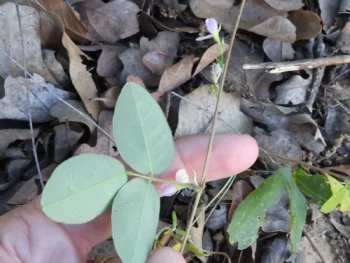
Downy Milkpea: A Charming Native Vine for Wildlife Gardens
If you’re looking for a low-maintenance native plant that attracts pollinators and provides food for wildlife, meet the downy milkpea (Galactia volubilis). This unassuming perennial vine might not win any flashy flower contests, but it’s a workhorse in the native garden that deserves a spot in your landscape.
What is Downy Milkpea?
Downy milkpea is a native perennial forb that grows as a climbing or trailing vine. Despite its common name, it’s not actually a milkweed at all – it belongs to the pea family (Fabaceae). This herbaceous plant lacks woody stems and dies back to the ground each winter, returning reliably each spring from its perennial root system.
You might also encounter this plant listed under its botanical synonyms, including Galactia macreei or Galactia mississippiensis, though Galactia volubilis is the currently accepted scientific name.
Where Does Downy Milkpea Grow Naturally?
This native gem has an impressive range across the eastern and central United States. You’ll find downy milkpea growing naturally from the Atlantic Coast to the Great Plains, thriving in states including Alabama, Arkansas, Delaware, Florida, Georgia, Illinois, Indiana, Kansas, Kentucky, Louisiana, Maryland, Mississippi, Missouri, New Jersey, New York, North Carolina, Ohio, Oklahoma, Pennsylvania, South Carolina, Tennessee, Texas, Virginia, and West Virginia, plus the District of Columbia.
- Species observed
- No observations
Why Grow Downy Milkpea in Your Garden?
While downy milkpea might seem modest compared to showier natives, it offers several compelling reasons to include it in your landscape:
- Pollinator magnet: The small, purple to pink pea-like flowers attract bees, butterflies, and other beneficial insects
- Wildlife food: Though not a primary food source, it provides supplemental nutrition for birds and mammals
- Low maintenance: Once established, this drought-tolerant native requires minimal care
- Soil improvement: As a member of the pea family, it fixes nitrogen in the soil
- Versatile growth: Works as ground cover or can climb up supports
Garden Design Ideas
Downy milkpea shines in naturalized settings and wildlife gardens. Consider using it in:
- Prairie and meadow restorations
- Woodland edges and borders
- Native plant gardens
- Pollinator gardens
- Areas where you want low-maintenance ground cover
Its trailing habit makes it perfect for cascading over walls or filling in gaps between other native plants.
Growing Conditions and Care
One of downy milkpea’s best qualities is its adaptability. This resilient native thrives in USDA hardiness zones 6-9 and tolerates a range of conditions:
- Sunlight: Full sun to partial shade
- Soil: Well-drained soils; tolerates various soil types
- Water: Drought tolerant once established
- Maintenance: Minimal – just cut back in late winter if desired
Based on wetland indicators, downy milkpea typically prefers upland sites but can tolerate occasional wet conditions, especially in the Midwest and Northeast regions where it’s classified as facultative.
Planting and Establishment Tips
Getting downy milkpea established in your garden is straightforward:
- Plant in spring after the last frost
- Space plants 2-3 feet apart to allow for spreading
- Water regularly the first year until established
- Provide support structures if you want it to climb
- Allow it to self-seed for natural expansion
Once established, downy milkpea typically requires no supplemental watering except during severe droughts.
The Bottom Line
Downy milkpea might not be the most glamorous native plant, but it’s exactly the kind of reliable, beneficial species that forms the backbone of a thriving native garden. Its combination of pollinator appeal, wildlife value, and low-maintenance nature makes it an excellent choice for gardeners who want maximum ecological benefit with minimal effort. Plus, knowing you’re supporting native wildlife while growing a plant perfectly adapted to your region? That’s pretty satisfying.
If you’re building a native plant collection or looking to support local ecosystems, downy milkpea deserves serious consideration. It’s proof that sometimes the most valuable garden residents are the ones that quietly do their job without demanding the spotlight.