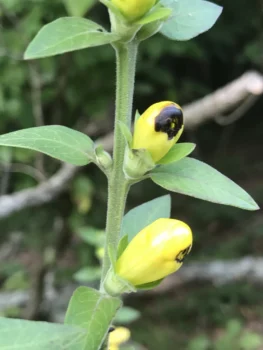
Downy Yellow False Foxglove: A Charming Native Wildflower for Your Woodland Garden
If you’re looking to add a splash of golden color to your shady garden spots, let me introduce you to one of nature’s more intriguing characters: the downy yellow false foxglove (Aureolaria virginica). This delightful native perennial might just be the perfect addition to your woodland garden – though it does come with a few quirky requirements that make it absolutely fascinating!
What Makes This Plant Special?
The downy yellow false foxglove is a true American native, naturally occurring across a impressive range from southeastern Canada all the way down to the Gulf Coast states. You’ll find this beauty growing wild in Alabama, Ontario, Connecticut, Delaware, District of Columbia, Florida, Georgia, Indiana, Kentucky, Louisiana, Maryland, Massachusetts, Michigan, Mississippi, New Hampshire, New Jersey, New York, North Carolina, Ohio, Pennsylvania, Rhode Island, South Carolina, Tennessee, Texas, Vermont, Virginia, and West Virginia.
- Species observed
- No observations
Despite its many synonyms in botanical circles (including Agalinis virginica, Dasistoma virginica, and Gerardia virginica), this plant has earned its place in native gardens across USDA hardiness zones 4-9.
A Garden Beauty with Personality
What sets downy yellow false foxglove apart is its stunning display of bright yellow, tubular flowers that appear in late summer and early fall – just when many other woodland plants are winding down for the season. The soft, downy foliage gives the plant its common name and adds a lovely textural element to shaded areas.
This perennial works beautifully in:
- Woodland gardens and naturalized areas
- Native plant gardens
- Understory plantings beneath mature trees
- Wildlife and pollinator gardens
The Plot Twist: It’s a Garden Vampire!
Here’s where things get interesting – downy yellow false foxglove is what botanists call a semi-parasitic plant. Don’t worry, it’s not going to drain your other garden plants! Instead, it has evolved a fascinating relationship with tree roots (particularly oak trees) where it taps into their root systems for some of its nutritional needs. Think of it as nature’s version of a helpful neighbor borrowing a cup of sugar!
This unique characteristic actually makes the plant quite low-maintenance once established, as it’s partially getting its nutrients from its tree hosts rather than relying entirely on soil fertility.
Growing Conditions and Care
Downy yellow false foxglove thrives in conditions that mimic its natural woodland habitat:
- Light: Partial shade to full shade
- Soil: Well-drained soils, adaptable to various soil types
- Moisture: Moderate moisture levels
- Host requirement: Best planted near mature trees, especially oaks
Planting and Establishment Tips
Because of its semi-parasitic nature, establishing downy yellow false foxglove requires a bit of strategy:
- Plant near established trees, particularly oaks, which serve as ideal hosts
- Choose a location with partial to full shade
- Ensure good drainage to prevent root rot
- Be patient – establishment may take a season or two as the plant develops its root connections
- Once established, it requires minimal care and maintenance
Wildlife and Pollinator Benefits
The bright yellow flowers of downy yellow false foxglove are magnets for pollinators, including bees and butterflies. The late-season blooming period makes it particularly valuable for providing nectar when many other flowers have finished for the year. This timing makes it an excellent addition to any pollinator-friendly garden design.
Is This Plant Right for Your Garden?
Downy yellow false foxglove is an excellent choice if you:
- Have mature trees (especially oaks) in your landscape
- Want to support native plants and local ecosystems
- Enjoy unique plants with interesting growing habits
- Need late-season color in shaded areas
- Prefer low-maintenance perennials once established
However, you might want to consider other options if you’re looking for a plant that can thrive in full sun or if you don’t have suitable host trees in your landscape.
The Bottom Line
Downy yellow false foxglove offers native plant enthusiasts a chance to grow something truly special – a beautiful wildflower that showcases one of nature’s most fascinating partnerships. While its semi-parasitic nature might seem unusual, it’s actually a wonderful example of how plants have evolved sophisticated relationships with their environment. Plus, once you understand its needs, it’s remarkably easy to care for and provides gorgeous late-season blooms that both you and local pollinators will appreciate.
If you’re ready to add a little botanical intrigue to your woodland garden, downy yellow false foxglove might just be the perfect conversation starter – and a beautiful one at that!