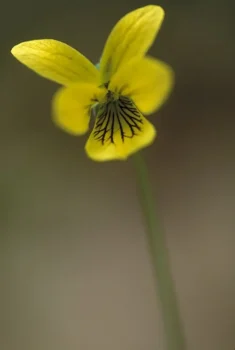
Downy Yellow Violet: A Charming Native Groundcover for Shade Gardens
If you’re looking for a delightful native wildflower to brighten up those shady corners of your garden, meet the downy yellow violet (Viola pubescens). This charming little perennial brings early spring color to woodland gardens and naturalized areas with its cheerful yellow blooms and soft, heart-shaped leaves.
What Makes the Downy Yellow Violet Special?
The downy yellow violet is a true North American native, naturally occurring across a remarkably wide range from southeastern Canada down to Georgia and west to the Great Plains. You’ll find this adaptable wildflower growing in states from Maine to Texas, and from the Atlantic Coast to the prairies of Wyoming and Saskatchewan.
This perennial forb grows as a low, spreading groundcover that typically reaches about 1.3 feet in height. Its rhizomatous growth form means it spreads slowly underground, creating colonies over time without being aggressive. The plant gets its common name from the fine, soft hairs (called pubescence) that cover its leaves, giving them a distinctive downy texture.
- Species observed
- No observations
Beauty in the Garden
In early spring, downy yellow violets produce their signature ½-inch yellow flowers, often with delicate purple veining that adds an extra touch of elegance. The dark green, heart-shaped leaves provide an attractive backdrop and remain throughout the growing season. While the flowers aren’t dramatically showy, they offer that subtle woodland charm that native plant enthusiasts adore.
The plant has a decumbent (low and spreading) growth habit, making it perfect for carpeting the forest floor or filling in bare spots under trees and shrubs.
Where to Use Downy Yellow Violet in Your Landscape
This native violet is ideal for:
- Woodland gardens and shade borders
- Naturalized areas and meadow edges
- Native plant gardens
- Groundcover in difficult shady spots
- Rain gardens and areas with medium moisture
Its moderate growth rate and rhizomatous spreading habit make it excellent for gradually filling in areas where you want low-maintenance, native groundcover.
Growing Conditions
Downy yellow violets are quite accommodating, but they do have some preferences:
- Light: Partial to full shade (shade tolerant)
- Soil: Medium-textured, well-draining soil
- pH: Slightly acidic to neutral (6.0-7.0)
- Moisture: Medium moisture needs – not drought-loving but not waterlogged either
- Fertility: Prefers fertile soil
- Hardiness: USDA zones 3-8 (can handle temperatures down to -33°F)
The plant has a facultative upland wetland status across most regions, meaning it usually grows in non-wetland areas but can tolerate some moisture.
Planting and Care Tips
Getting started with downy yellow violets is relatively straightforward:
- Propagation: Can be grown from seed (requires cold stratification), bare root plants, cuttings, or sprigs
- Planting time: Spring or fall
- Spacing: Plant 4,800-11,000 plants per acre for large-scale plantings
- Establishment: Be patient – seedling vigor is low, so establishment can be slow
- Maintenance: Very low maintenance once established
One thing to note: commercial availability is limited (No Known Source according to plant databases), so you may need to source seeds or plants from specialty native plant nurseries or seed exchanges.
Wildlife and Pollinator Benefits
While specific wildlife benefit data is limited, violets in general are valuable for pollinators and wildlife. The early spring blooms provide nectar for small bees, flies, and early butterflies when few other flowers are available. Fritillary butterfly caterpillars use various violet species as host plants, making this a valuable addition to pollinator-friendly gardens.
The low seed abundance and slow spread rate mean wildlife won’t rely heavily on the seeds, but the early flowers make it worthwhile for supporting pollinators emerging in spring.
Is Downy Yellow Violet Right for Your Garden?
Consider planting downy yellow violet if you:
- Have shady areas that need low-maintenance groundcover
- Want to support native ecosystems and early pollinators
- Enjoy subtle, woodland-style beauty over flashy displays
- Have patience for slow-establishing plants
- Garden in zones 3-8 with adequate shade and moisture
This native violet might not be the showstopper of your garden, but it’s exactly the kind of gentle, reliable native that creates the backbone of healthy, sustainable landscapes. Its modest beauty and ecological value make it a worthy addition to any shade gardener’s plant palette.