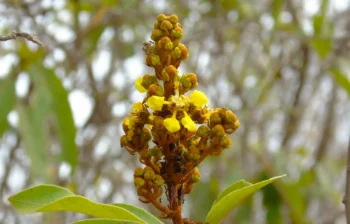
Dragon Withe: A Native Caribbean Shrub Worth Discovering
If you’re gardening in the Caribbean and looking to support local ecosystems while adding native beauty to your landscape, dragon withe (Heteropterys laurifolia) might just be the under-the-radar native plant you’ve been searching for. This perennial shrub brings authentic Caribbean character to gardens in Puerto Rico and the U.S. Virgin Islands, though it’s not exactly what you’d call a household name in the gardening world.
What Is Dragon Withe?
Dragon withe is a native Caribbean shrub that belongs to the Malpighiaceae family. As a true perennial, this multi-stemmed woody plant typically grows to heights of 13-16 feet, though it can sometimes stretch taller or remain more compact depending on environmental conditions. You might also see it listed under its botanical synonym, Banisteria laurifolia, in older gardening references.
Where Does It Call Home?
This Caribbean native has its roots firmly planted in Puerto Rico and the U.S. Virgin Islands, where it has evolved alongside local wildlife and growing conditions for countless generations. Its natural range makes it perfectly adapted to the unique challenges and opportunities of Caribbean gardening.
- Species observed
- No observations
Why Consider Dragon Withe for Your Garden?
There are several compelling reasons to give this native shrub a spot in your landscape:
- Native authenticity: As a true Caribbean native, it supports local ecosystems and requires fewer resources than non-native alternatives
- Adaptability: Its facultative wetland status means it can handle both wet and dry conditions, making it versatile for various garden situations
- Low maintenance potential: Native plants typically require less water, fertilizer, and pest control once established
- Ecological value: Native shrubs often provide food and habitat for local wildlife, though specific benefits for dragon withe aren’t well documented
The Challenge: Limited Growing Information
Here’s where things get a bit tricky for the eager gardener. Dragon withe falls into that frustrating category of native plants that are ecologically important but haven’t made it into mainstream horticulture. This means reliable information about specific growing conditions, propagation methods, and care requirements is surprisingly scarce.
What We Do Know About Growing Dragon Withe
While detailed cultivation guides are hard to come by, we can make some educated assumptions based on its native habitat and plant family characteristics:
- Climate needs: Being native to the Caribbean, it likely thrives in USDA hardiness zones 10-11
- Water tolerance: Its facultative wetland status suggests it can handle both moist and well-draining conditions
- Soil preferences: Probably adaptable to various soil types common in its native range
- Sun requirements: Most shrubs in this family prefer full to partial sun
Should You Plant Dragon Withe?
If you’re gardening in Puerto Rico or the U.S. Virgin Islands, dragon withe could be an excellent choice for creating authentic native landscapes. Its shrub form makes it suitable for:
- Native plant gardens
- Wildlife-friendly landscapes
- Naturalistic design schemes
- Areas where you want a medium-sized native shrub
However, the limited cultivation information means you’ll be somewhat pioneering in your growing efforts. This could be exciting if you enjoy experimenting with lesser-known natives, but frustrating if you prefer well-documented, foolproof plants.
The Bottom Line
Dragon withe represents both the promise and the challenge of native plant gardening in the Caribbean. While it offers the ecological benefits and authentic character that make native plants so valuable, the lack of readily available growing information means you’ll need to be patient and observant as you learn what works in your specific garden conditions.
If you’re up for the adventure of growing a true Caribbean native that supports local ecosystems, dragon withe might reward your efforts with years of low-maintenance beauty. Just be prepared to become something of a pioneer gardener as you figure out exactly what makes this native shrub happiest in cultivation.