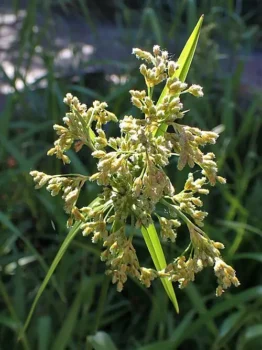
Drooping Bulrush: A Graceful Native Sedge for Your Water Garden
If you’re looking to add a touch of natural elegance to your wetland garden or pond edge, drooping bulrush (Scirpus lineatus) might just be the perfect native plant you’ve been searching for. This charming southeastern native brings a delicate, graceful presence to water gardens while supporting local ecosystems.
Meet the Drooping Bulrush
Drooping bulrush is a perennial sedge that belongs to the grass-like family of plants. Don’t let the name fool you – while it’s called a bulrush, it’s actually quite refined and delicate in appearance. You might occasionally see it listed under its synonym, Scirpus fontinalis, but drooping bulrush is the name that’s stuck.
As a native plant species, drooping bulrush has been quietly doing its job in southeastern wetlands long before any of us started thinking about native gardening. It’s perfectly adapted to thrive in conditions that would make many garden plants throw in the trowel.
Where You’ll Find This Native Beauty
Drooping bulrush calls the southeastern United States home, naturally occurring across Alabama, Florida, Georgia, Louisiana, Mississippi, North Carolina, South Carolina, and Virginia. This distribution tells us everything we need to know about its preferences – it loves warm, humid climates and wet feet.
- Species observed
- No observations
Why Choose Drooping Bulrush for Your Garden?
There are several compelling reasons to consider this native sedge for your landscape:
- True native credentials: Supporting local ecosystems while reducing maintenance needs
- Wetland specialist: Perfect for those challenging wet spots where other plants struggle
- Low maintenance: Once established in suitable conditions, it largely takes care of itself
- Ecosystem support: Provides habitat and food sources for wetland wildlife
- Natural appearance: Adds authentic wetland character to water features
Perfect Garden Settings
Drooping bulrush isn’t your typical border plant – it has very specific preferences that make it ideal for certain garden situations:
- Rain gardens and bioswales
- Pond and stream edges
- Bog gardens
- Wetland restoration projects
- Native plant gardens with water features
- Natural, low-maintenance landscaping
Growing Conditions and Care
Success with drooping bulrush comes down to one key factor: water. This plant thrives in consistently moist to wet soils and won’t tolerate drought conditions. Here’s what it needs to flourish:
Light requirements: Full sun to partial shade – it’s quite adaptable to different light conditions as long as moisture needs are met.
Soil preferences: Wet, boggy, or consistently moist soils. It’s naturally found in wetland areas, so think swampy rather than well-drained.
Hardiness zones: USDA zones 7-10, making it suitable for most of its natural southeastern range.
Maintenance: Very low once established in appropriate conditions. The main care is ensuring it doesn’t dry out.
Planting and Establishment Tips
Getting drooping bulrush established is straightforward if you can provide the right conditions:
- Plant in spring after the last frost for best establishment
- Choose the wettest spot in your garden – where other plants might struggle
- Space plants according to your desired coverage, as they’ll spread naturally over time
- Water thoroughly and maintain consistent moisture during establishment
- Be patient – like many native plants, it may take a season to really settle in
Is Drooping Bulrush Right for Your Garden?
This native sedge is perfect for gardeners who:
- Have wet or boggy areas that need landscaping
- Are creating rain gardens or water features
- Want to support local native plant communities
- Appreciate subtle, natural beauty over flashy flowers
- Prefer low-maintenance plants once established
However, drooping bulrush might not be the best choice if you have dry garden conditions, want a formal appearance, or are looking for showy flowering plants.
Supporting Your Local Ecosystem
By choosing drooping bulrush, you’re doing more than just solving a wet-soil gardening challenge. Native sedges like this one play important roles in wetland ecosystems, providing habitat structure and supporting the complex web of life that depends on healthy wetland environments.
While drooping bulrush may not be a major pollinator plant in the traditional sense, it contributes to the overall health of wetland habitats that many creatures depend on. It’s one of those quiet, hardworking natives that does its job without demanding attention.
If you have the right growing conditions – particularly that crucial wet soil requirement – drooping bulrush can be a valuable addition to your native plant palette. It brings authentic southeastern wetland character to your garden while supporting the local ecosystem, all with minimal fuss once established.