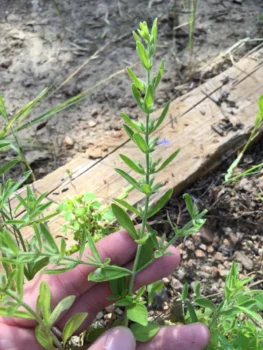
Drummond’s False Pennyroyal: A Fragrant Native Gem for Low-Maintenance Gardens
If you’re looking for a charming, low-maintenance native plant that brings both fragrance and pollinator appeal to your garden, meet Drummond’s false pennyroyal (Hedeoma drummondii). This delightful little herb might not be the showiest plant in your garden, but it more than makes up for it with its aromatic qualities and ecological benefits.
What is Drummond’s False Pennyroyal?
Drummond’s false pennyroyal is a native North American herb that belongs to the mint family. Despite its common name, it’s not a true pennyroyal but gets its moniker from its similar minty fragrance. This versatile plant can grow as an annual, biennial, or perennial depending on growing conditions, making it quite adaptable to different garden situations.
As a forb (a non-woody flowering plant), Drummond’s false pennyroyal stays relatively small and compact, making it perfect for tucking into rock gardens, prairie plantings, or as a fragrant ground cover in naturalized areas.
Where Does It Grow Naturally?
This hardy native has an impressive range across the lower 48 states, thriving in Alabama, Arizona, Arkansas, California, Colorado, Kansas, Minnesota, Mississippi, Montana, Nebraska, Nevada, New Mexico, North Dakota, Oklahoma, Oregon, South Dakota, Texas, Utah, and Wyoming. Its wide distribution speaks to its adaptability and resilience.
- Species observed
- No observations
A Note About Rarity
While Drummond’s false pennyroyal grows across many states, it’s worth noting that in Alabama, this species has a rarity status of S2, meaning it’s considered rare within that state. If you’re gardening in Alabama or other areas where it might be uncommon, make sure to source your plants or seeds from reputable native plant nurseries that practice responsible collection methods.
Why Grow Drummond’s False Pennyroyal?
There are several compelling reasons to consider adding this native gem to your garden:
- Pollinator magnet: The small, delicate flowers attract beneficial insects, small native bees, and butterflies
- Aromatic appeal: Crush the leaves gently to release a pleasant, mint-like fragrance
- Low maintenance: Once established, it’s quite drought tolerant and requires minimal care
- Native ecosystem support: As a native species, it supports local wildlife and fits naturally into regional ecosystems
- Versatile garden use: Works well in rock gardens, prairie restorations, wildflower meadows, or naturalized areas
Growing Conditions and Care
One of the best things about Drummond’s false pennyroyal is how easy it is to grow. This adaptable native thrives in USDA hardiness zones 4-9, making it suitable for most of the continental United States.
Light requirements: Prefers full sun but can tolerate some light shade
Soil needs: Well-draining soil is essential. It’s quite tolerant of poor soils and actually prefers lean conditions over rich, heavily fertilized ground
Water requirements: Drought tolerant once established, though it appreciates occasional watering during extended dry periods
Maintenance: Very low maintenance. Allow it to self-seed if you want it to naturalize in your garden
Design Ideas and Garden Uses
Drummond’s false pennyroyal works beautifully in several garden styles:
- Native plant gardens: Pairs well with other native grasses and wildflowers
- Rock gardens: Its compact size and drought tolerance make it ideal for rocky, well-drained spots
- Prairie restorations: Helps recreate natural grassland ecosystems
- Xeriscape gardens: Perfect for water-wise landscaping
- Herb gardens: Adds fragrance and texture to aromatic plant collections
Planting and Establishment Tips
Getting Drummond’s false pennyroyal established in your garden is straightforward:
- Plant in spring after the last frost date
- Space plants 12-18 inches apart if planting multiple specimens
- Water regularly during the first growing season to help establishment
- Avoid over-fertilizing, as rich soils can make the plant less compact and fragrant
- Allow some plants to go to seed if you want natural reseeding
The Bottom Line
Drummond’s false pennyroyal might not win any beauty contests, but it’s exactly the kind of hardworking native plant that makes gardens more sustainable and ecologically valuable. Its combination of low maintenance requirements, pollinator appeal, and pleasant fragrance makes it a wonderful addition to native plant gardens, especially for gardeners who want to support local ecosystems without a lot of fuss.
Whether you’re creating a prairie restoration, designing a xeriscape garden, or simply want to add some native charm to your landscape, this adaptable little herb deserves serious consideration. Just remember to source it responsibly, especially if you’re in areas where it’s less common!