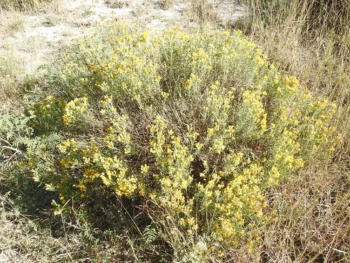
Drummond’s Goldenbush: A Texas Native That Shines When Others Fade
If you’re looking for a plant that knows how to make an entrance when the gardening season is winding down, let me introduce you to Drummond’s goldenbush (Isocoma drummondii). This charming Texas native might be small in stature, but it packs a serious punch when it comes to late-season color and wildlife value.
What Exactly is Drummond’s Goldenbush?
Drummond’s goldenbush is a perennial shrub that stays refreshingly compact, typically growing under 1.5 feet tall and rarely exceeding 3 feet at maturity. Think of it as the perfect garden companion that won’t hog all the space or attention—until fall arrives, that is. You might also find this plant listed under its scientific synonyms Haplopappus drummondii or Isocoma megalantha in older gardening references.
This native beauty is exclusively Texan, growing naturally throughout the Lone Star State. Its narrow, linear leaves create a fine-textured backdrop that bursts into clouds of bright yellow composite flowers when autumn arrives.
- Species observed
- No observations
Why Texas Gardeners Should Consider This Golden Gem
Here’s where Drummond’s goldenbush really earns its keep in the garden:
- Native credentials: As a true Texas native, it’s perfectly adapted to local conditions and supports native wildlife
- Late-season star: Provides vibrant yellow blooms in fall when many other plants are calling it quits
- Pollinator magnet: Those cheerful flowers attract native bees, butterflies, and other beneficial insects when nectar sources are becoming scarce
- Drought champion: Once established, it laughs in the face of Texas heat and drought
- Low maintenance: Perfect for gardeners who want beauty without the fuss
Perfect Spots for Drummond’s Goldenbush
This versatile native shines in several garden settings:
- Xeriscaped gardens and drought-tolerant landscapes
- Rock gardens where its compact size won’t overwhelm
- Native plant borders and wildlife gardens
- Front-of-border plantings in perennial beds
- Naturalized areas where it can self-seed and spread naturally
Growing Conditions That Make It Happy
Drummond’s goldenbush is refreshingly easy to please, especially if you can provide:
- Sunlight: Full sun is best—at least 6 hours of direct sunlight daily
- Soil: Well-draining soil is essential; it particularly loves limestone-based or alkaline soils typical of Texas
- Water: Drought tolerant once established, but appreciates occasional deep watering during extended dry spells
- Climate: Thrives in USDA hardiness zones 8a through 10a
Planting and Care Tips for Success
Getting started with Drummond’s goldenbush is surprisingly straightforward:
When to plant: Spring is ideal, giving the plant a full growing season to establish before facing its first winter.
Planting process: Dig a hole twice as wide as the root ball but no deeper. In clay soils, consider amending with gravel or sand to improve drainage—this plant really doesn’t like wet feet.
First-year care: Water regularly the first growing season to help establish a strong root system. After that, you can largely let nature take the wheel.
Ongoing maintenance: This is where Drummond’s goldenbush really shines—it needs very little fussing. Light pruning in late winter can help maintain shape, but it’s not strictly necessary. The plant may self-seed in favorable conditions, which is usually welcomed in naturalized areas.
The Bottom Line
Drummond’s goldenbush proves that good things really do come in small packages. For Texas gardeners seeking a reliable native that provides late-season color, supports local wildlife, and won’t demand constant attention, this golden beauty deserves serious consideration. It’s the kind of plant that quietly goes about its business all season, then surprises you with a spectacular fall finale that both you and the local pollinators will absolutely love.
Plus, there’s something deeply satisfying about growing a plant that’s been thriving in Texas long before any of us arrived on the scene. Drummond’s goldenbush isn’t just a pretty face—it’s a piece of Texas botanical heritage that you can nurture right in your own backyard.