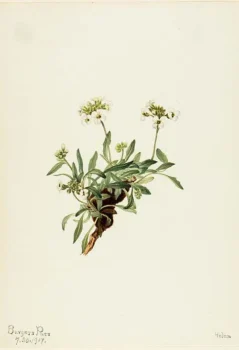
Drummond’s Rockcress: A Delicate Native Beauty for Rock Gardens and Natural Landscapes
If you’re looking for a charming native wildflower that brings understated elegance to your garden, Drummond’s rockcress (Arabis drummondii) might just be the perfect addition. This delicate perennial herb offers subtle beauty and impressive adaptability, making it a wonderful choice for gardeners who appreciate North America’s native flora.
What Makes Drummond’s Rockcress Special?
Drummond’s rockcress is a true North American native, with an impressively wide distribution spanning from Alaska all the way down to the southwestern United States. This hardy little plant has made itself at home across Canada and throughout much of the lower 48 states, proving its remarkable adaptability to diverse climates and conditions.
As a biennial or short-lived perennial forb, this plant typically reaches about 2 feet in height when mature. It grows with a single crown form and maintains an upright, erect posture that adds vertical interest to low-growing garden areas.
- Species observed
- No observations
Garden Appeal and Landscape Role
Don’t let its modest appearance fool you – Drummond’s rockcress has plenty to offer gardeners. In late spring, the plant produces clusters of small, white flowers that create a delicate, airy display. While the blooms might not be the showiest in your garden, they possess a refined charm that complements other native plants beautifully.
The plant’s green foliage has a medium texture and remains porous throughout both summer and winter growing seasons. Its moderate growth rate means it won’t overwhelm nearby plants, making it an excellent companion for other native wildflowers and grasses.
Perfect Garden Settings
Drummond’s rockcress shines in several garden scenarios:
- Rock gardens: Its natural affinity for rocky soils makes it perfect for rock and gravel gardens
- Native plant gardens: An excellent choice for authentic regional plantings
- Naturalistic landscapes: Blends seamlessly into prairie-style and wildflower meadow plantings
- Xerophytic gardens: Once established, it handles drier conditions reasonably well
Growing Conditions and Care
One of the best things about Drummond’s rockcress is its easygoing nature. This plant typically prefers:
- Soil: Well-draining, coarse to medium-textured soils (avoid heavy clay)
- Moisture: Medium moisture requirements with low drought tolerance initially
- Sunlight: Intermediate shade tolerance, so it can handle partial sun to light shade
- pH: Adaptable to slightly acidic to neutral soils (5.4 to 7.4)
- Climate: Hardy in USDA zones 2-7, tolerating temperatures as low as -38°F
The plant’s facultative upland status means it usually prefers non-wetland conditions but can occasionally tolerate wetter soils.
Planting and Propagation
Growing Drummond’s rockcress from seed is your best bet, as it’s not typically propagated through other methods. With an impressive 5 million seeds per pound, you’ll have plenty to work with! The seeds are produced abundantly during summer and have medium seedling vigor.
Plant seeds in fall for spring germination, or start them indoors in late winter. The plant requires at least 60 frost-free days to complete its growing cycle, and it actively grows during spring and summer months.
Wildlife and Pollinator Benefits
While specific wildlife data isn’t extensively documented, native rockcresses generally support various small pollinators during their spring blooming period. The white flowers attract small bees, beneficial insects, and occasionally butterflies, contributing to your garden’s overall ecological health.
Important Conservation Note
Before adding Drummond’s rockcress to your garden, it’s crucial to know that this species is considered endangered in New Jersey, where it holds a rarity status of S1.1. If you’re gardening in areas where this plant is rare, please ensure you source seeds or plants responsibly from reputable native plant suppliers rather than collecting from wild populations.
Is Drummond’s Rockcress Right for Your Garden?
This native beauty is perfect for gardeners who:
- Appreciate subtle, naturalistic plantings over flashy displays
- Want to support native biodiversity
- Have well-draining soils and can provide moderate moisture
- Are creating rock gardens or prairie-style landscapes
- Live in cooler climates (zones 2-7)
While Drummond’s rockcress may not be the star of your garden show, it’s the kind of reliable, understated native plant that forms the backbone of successful naturalistic landscapes. Its wide native range and adaptability make it a safe choice for gardeners looking to create authentic, regionally appropriate plantings that support local ecosystems.