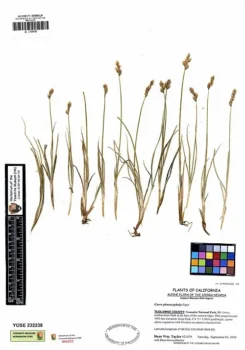
Dunhead Sedge: The Unsung Hero of Low-Maintenance Native Landscaping
If you’re looking for a native plant that’s as reliable as your favorite pair of hiking boots and about as fussy as a golden retriever, let me introduce you to dunhead sedge (Carex phaeocephala). This humble little perennial might not win any beauty contests with flashy flowers, but it’s the kind of dependable groundcover that makes gardeners sleep better at night.
What Exactly Is Dunhead Sedge?
Dunhead sedge is a native North American sedge that belongs to the Cyperaceae family – think of it as grass’s practical cousin. This perennial graminoid forms dense, low-growing tufts of narrow, blue-green to gray-green leaves that create a lovely textural backdrop in the garden. The dunhead part of its name comes from its small, brownish flower heads that appear in summer – they’re not exactly showstoppers, but they have their own understated charm.
Where Does It Call Home?
This versatile sedge is truly a child of western North America. You’ll find it naturally growing from Alaska all the way down through Canada and across fourteen western U.S. states, including California, Colorado, Idaho, Montana, Nevada, New Mexico, Oregon, Utah, Washington, and Wyoming. It’s essentially native to most of the western half of the continent – talk about having good real estate instincts!
- Species observed
- No observations
Why Your Garden Will Thank You for Planting It
Here’s where dunhead sedge really shines – it’s the ultimate low-maintenance groundcover. Once established, this little trooper is incredibly drought-tolerant and thrives in USDA hardiness zones 3-8. Whether you’re dealing with full sun or partial shade, sandy soil or rocky terrain, dunhead sedge adapts like a champ.
The plant’s versatile wetland status means it’s flexible about moisture levels too. Depending on your region, it can handle everything from occasionally wet conditions to consistently dry upland sites. In most western areas, it actually prefers well-drained, drier conditions – perfect for water-wise gardening.
Perfect Spots for Dunhead Sedge
This sedge is particularly brilliant for:
- Native plant gardens and naturalistic landscapes
- Xeriscape and drought-tolerant garden designs
- Rock gardens and alpine-style plantings
- Erosion control on slopes and banks
- Restoration projects in natural areas
- Low-maintenance groundcover where you want texture without fuss
Growing Dunhead Sedge Successfully
The beauty of dunhead sedge lies in its simplicity. Here’s how to keep it happy:
Planting: Spring or fall are your best bets for planting. Give it well-drained soil – it’s not picky about soil type but definitely doesn’t appreciate soggy feet in most regions.
Watering: Water regularly during the first growing season to help it establish, then you can largely ignore it. Once mature, it’s remarkably drought-tolerant.
Light Requirements: Full sun to partial shade works well, though it tends to be most compact and robust in sunnier spots.
Maintenance: Practically none! It may self-seed in favorable conditions, which is usually a bonus rather than a problem.
Wildlife and Ecosystem Benefits
While dunhead sedge won’t attract clouds of butterflies (sedges are wind-pollinated rather than insect-pollinated), it does provide valuable habitat structure for small wildlife. Birds may nibble on the seeds, and the dense growth provides cover for beneficial insects and small creatures. Plus, as a native plant, it supports the local ecosystem in ways that non-native alternatives simply can’t match.
The Bottom Line
Dunhead sedge might not be the flashiest plant in the native plant catalog, but it’s exactly the kind of reliable, low-maintenance performer that every gardener needs. If you’re looking to create a sustainable, water-wise landscape that celebrates your region’s natural heritage, this unassuming sedge deserves a spot in your garden. Sometimes the best plants are the ones that quietly do their job while you focus on the showier stars – and dunhead sedge does that job very, very well.