Dust Lichen: The Powdery Garden Visitor You Never Planted
Have you ever noticed a fine, powdery substance coating the bark of trees in your yard and wondered what it might be? Meet the dust lichen (Lepraria lobificans), a fascinating organism that’s probably been quietly living in your garden ecosystem without you even realizing it!
What Exactly Is Dust Lichen?
Despite its name suggesting it’s a plant, dust lichen is actually a remarkable partnership between fungi and algae working together as one organism. This collaborative relationship, called symbiosis, allows lichens to thrive in places where neither partner could survive alone. The fungal partner provides structure and protection, while the algae contribute food through photosynthesis.
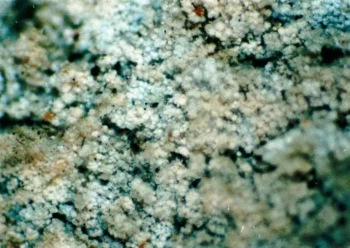
Dust lichen gets its common name from its distinctive powdery, granular appearance that looks almost like someone dusted the bark with fine flour or chalk. You might also encounter it under its scientific name, Lepraria lobificans, or its historical synonyms including Crocynia aliciae and Lepraria finkii.
Where You’ll Find Dust Lichen
This native North American species is particularly common in the eastern regions of the continent, where it thrives in humid, temperate environments. You’re most likely to spot dust lichen growing on the bark of deciduous trees, old wooden fences, or weathered wood surfaces in shaded, moist areas of your property.
Identifying Dust Lichen in Your Garden
Spotting dust lichen is easier than you might think once you know what to look for:
- Appears as a pale gray-green to whitish powdery coating
- Has a granular, dust-like texture that might rub off if touched
- Typically grows in patches on tree bark, especially in crevices
- Prefers shaded, humid spots rather than sunny, dry areas
- Often found on the north side of trees or in areas with consistent moisture
Is Dust Lichen Beneficial for Your Garden?
The presence of dust lichen in your garden is actually a good sign! Lichens are incredibly sensitive to air pollution, so finding them indicates that your local air quality is relatively clean. They serve as natural air quality monitors – think of them as tiny environmental detectives.
While dust lichen doesn’t directly benefit pollinators like flowering plants do, it plays important ecological roles:
- Provides food and shelter for small insects and invertebrates
- Contributes to nutrient cycling as it slowly breaks down
- Helps retain moisture in the bark ecosystem
- Indicates healthy, unpolluted air in your garden space
Can You Grow Dust Lichen?
Here’s where dust lichen differs dramatically from typical garden plants – you can’t actually plant or cultivate it! Lichens grow extremely slowly and require very specific environmental conditions that are nearly impossible to replicate artificially. They need clean air, the right humidity levels, and suitable substrates that develop naturally over time.
Instead of trying to grow dust lichen, the best approach is to create conditions that welcome it naturally:
- Maintain mature trees with textured bark
- Avoid using harsh chemicals or pesticides that might affect air quality
- Keep some shaded, humid areas in your landscape
- Allow old wooden structures to weather naturally (where appropriate)
Living Alongside Dust Lichen
If you discover dust lichen in your garden, consider yourself fortunate to have such a sensitive indicator species thriving on your property. There’s no need to remove it – dust lichen doesn’t harm trees or wooden structures. In fact, its presence suggests you’re maintaining a healthy, balanced ecosystem.
The next time you’re wandering through your garden, take a moment to appreciate these remarkable organisms quietly doing their part in your local ecosystem. They may not have showy flowers or dramatic foliage, but dust lichens represent one of nature’s most successful partnerships, having survived and thrived for millions of years through cooperation and adaptation.