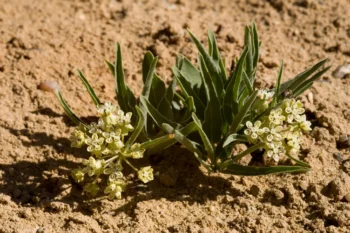
Dwarf Milkweed: A Petite Powerhouse for Pollinator Gardens
Meet the dwarf milkweed (Asclepias involucrata), a delightfully compact native that proves good things really do come in small packages. This low-maintenance perennial might be small in stature, but it’s mighty in its ability to support pollinators while thriving in some of the toughest growing conditions your garden can dish out.
What Makes Dwarf Milkweed Special?
Unlike its towering milkweed cousins, dwarf milkweed keeps things close to the ground, typically staying under 1.5 feet tall and never exceeding 3 feet at maturity. Don’t let its modest height fool you – this little shrub packs a serious punch when it comes to supporting wildlife and adding charm to your landscape.
Also known scientifically as Asclepias involucrata (and sometimes referred to by its synonym Asclepias macrosperma), this native beauty produces clusters of small, creamy white to pale pink flowers that pollinators absolutely adore.
Where Does Dwarf Milkweed Call Home?
This hardy native has made itself at home across the southwestern and south-central United States, naturally occurring in Arizona, Colorado, Kansas, New Mexico, Oklahoma, Texas, and Utah. Its natural range tells you everything you need to know about its tough-as-nails personality and love for drier climates.
- Species observed
- No observations
Why Your Garden Needs This Little Champion
Here’s where dwarf milkweed really shines:
- Pollinator magnet: Bees, butterflies, and other beneficial insects flock to its nectar-rich blooms
- Monarch supporter: Like all milkweeds, it serves as a crucial host plant for monarch butterfly caterpillars
- Drought warrior: Once established, it laughs in the face of dry conditions
- Low maintenance: Perfect for gardeners who want maximum impact with minimal fuss
- Native pride: Supporting local ecosystems while reducing your garden’s environmental footprint
Perfect Garden Spots for Dwarf Milkweed
This versatile native fits beautifully into several garden styles:
- Xeriscapes and drought-tolerant landscapes
- Native plant gardens
- Pollinator and butterfly gardens
- Rock gardens and naturalized areas
- Meadow plantings and prairie restorations
- Groundcover in sunny spots
Growing Dwarf Milkweed: The Easy Path to Success
Hardiness: Thrives in USDA zones 5-9, making it suitable for most temperate climates.
Sun and Soil: Give this sun-lover a spot with full sun exposure and well-draining soil. It particularly enjoys sandy or gravelly soils that remind it of its native habitat. Heavy clay or constantly moist soils are definitely not its cup of tea.
Planting Tips:
- Start from seed for best results – dwarf milkweed grows readily from seed
- Plant seeds in fall for natural cold stratification, or cold-treat purchased seeds before spring planting
- Space plants 12-18 inches apart to allow for their spreading habit
- Water regularly during the first growing season to help establish roots
Care and Maintenance: Here’s the best part – dwarf milkweed is wonderfully low-maintenance once established. Water sparingly (overwatering is more likely to harm it than help), and resist the urge to fertilize. This tough native prefers lean soils and can actually become too lush with rich feeding, making it more susceptible to problems.
A Few Things to Keep in Mind
While dwarf milkweed is generally well-behaved, remember that all milkweeds contain a milky sap that can be irritating to skin and eyes. Wear gloves when handling, and keep this in mind if you have curious pets or small children who like to explore the garden with their mouths.
Also, like other milkweeds, it may self-seed readily in ideal conditions. Most gardeners consider this a bonus, but keep an eye on it if you prefer a more controlled garden aesthetic.
The Bottom Line
Dwarf milkweed is a fantastic choice for gardeners who want to support native wildlife without the commitment of high-maintenance plants. Its compact size makes it perfect for smaller spaces, while its drought tolerance and pollinator appeal make it an ecological superstar. Whether you’re creating a dedicated native plant garden or just want to add some low-maintenance color that butterflies will love, this little milkweed delivers big results.
Ready to welcome some tiny but mighty native power into your garden? Dwarf milkweed might just be the perfect petite pollinator plant you’ve been looking for.