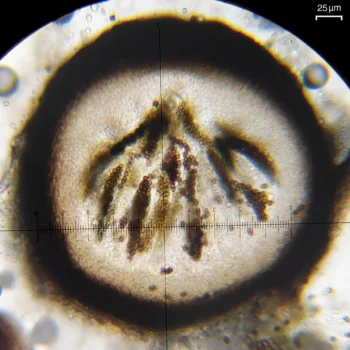
Dwarf Muellerella Lichen: A Tiny Garden Visitor You Might Never Notice
Have you ever spotted tiny, crusty patches on rocks or bark in your garden and wondered what they were? You might have encountered the dwarf muellerella lichen (Muellerella pygmaea), one of nature’s most overlooked but fascinating organisms. This diminutive North American native is part of the incredible world of lichens – those remarkable partnerships between fungi and algae that have been quietly colonizing surfaces for millions of years.
What Exactly Is Dwarf Muellerella Lichen?
Let’s clear up any confusion right away: Muellerella pygmaea isn’t a plant you can pick up at your local nursery. It’s a lichen, which means it’s actually two organisms living together in perfect harmony – a fungus and an alga. The fungus provides structure and protection, while the alga produces food through photosynthesis. It’s like nature’s ultimate roommate situation!
This particular lichen is what scientists call crustose, meaning it forms a crust-like layer that’s tightly attached to whatever surface it calls home. Think of it as nature’s paint job – once it’s there, it’s there to stay.
Where You’ll Find This Tiny Native
As a native species to North America, dwarf muellerella lichen has been quietly making itself at home across the continent long before any of us started thinking about native gardening. While specific distribution details for this species are limited in readily available sources, lichens like this one typically show up in various habitats where conditions are just right.
Is It Good for Your Garden?
Here’s where things get interesting! While you can’t plant or cultivate dwarf muellerella lichen (it does its own thing, thank you very much), finding it in your garden is actually a wonderful sign. Lichens are like nature’s air quality detectors – they’re super sensitive to pollution, so their presence often indicates clean air in your area.
Benefits of having lichens around include:
- They’re indicators of good environmental health
- They add subtle texture and natural character to garden surfaces
- They’re completely harmless to plants, structures, and humans
- They contribute to biodiversity in small but meaningful ways
How to Spot Dwarf Muellerella Lichen
Identifying this tiny lichen takes a bit of detective work since it’s quite small (hence the pygmaea part of its name, which means dwarf). Look for:
- Thin, crusty patches that seem painted on to surfaces
- Very small size – these are truly miniature lichens
- Tight attachment to bark, rock, or other hard surfaces
- Subtle coloration that blends with its surroundings
Keep in mind that this lichen was previously known by the scientific name Tichothecium pygmaeum, so you might find it referenced under that name in older field guides or research.
Living Alongside Your Lichen Neighbors
The best thing you can do for dwarf muellerella lichen is simply leave it alone. These remarkable organisms don’t need watering, fertilizing, or any care whatsoever. In fact, they prefer you keep your hands off! Here are some lichen-friendly garden practices:
- Avoid using harsh chemicals or pressure washing surfaces where lichens grow
- Don’t scrub or scrape them off – they’re not harmful and add natural character
- Maintain good air quality around your property when possible
- Appreciate them as signs of a healthy ecosystem
The Bottom Line
While dwarf muellerella lichen won’t be the star of your garden show, discovering it on your property is like getting a small gold star from Mother Nature herself. It’s a quiet testament to clean air and natural processes at work in your garden ecosystem. So the next time you spot what looks like tiny crusty patches on bark or stone, take a moment to appreciate these remarkable little partnerships that have been perfecting the art of cooperation long before humans ever thought of gardening.
Remember, you didn’t plant it, you can’t control it, and you don’t need to manage it – sometimes the best gardening advice is simply to step back and let nature do what it does best.