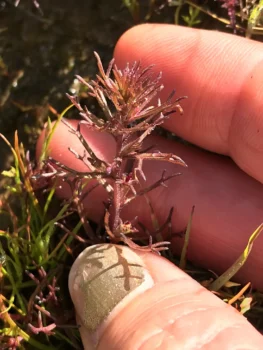
Dwarf Owl’s-Clover: A Delicate Native Wildflower for Pacific Gardens
If you’re looking for a charming little native wildflower that doesn’t demand much attention but delivers plenty of natural beauty, dwarf owl’s-clover (Triphysaria pusilla) might just be your perfect match. This petite annual forb is one of those understated gems that quietly enhances native plant gardens throughout the Pacific Northwest and California.
What Makes Dwarf Owl’s-Clover Special?
Dwarf owl’s-clover is a true Pacific Coast native, naturally occurring from British Columbia down through Washington, Oregon, and into California. As an annual forb, it completes its entire life cycle in just one growing season, making it a reliable self-seeding addition to naturalized landscapes.
This little wildflower grows in British Columbia, California, Oregon, and Washington, thriving in the region’s unique climate conditions.
- Species observed
- No observations
You might also encounter this plant listed under its former scientific names, Orthocarpus pusillus, as botanical classifications have evolved over time.
Garden Appeal and Landscape Role
Don’t expect dwarf owl’s-clover to be a showstopper – its beauty lies in subtlety. The plant produces delicate, small tubular flowers in shades of white to pale pink that create a soft, naturalistic effect in the garden. While individual plants are modest in size, they work beautifully when allowed to naturalize in drifts.
This native wildflower excels in:
- Native plant gardens seeking authentic regional character
- Wildflower meadows and naturalized areas
- Understory plantings beneath taller native shrubs
- Wildlife-friendly landscapes focused on supporting local ecosystems
Supporting Local Wildlife
As a native species, dwarf owl’s-clover has co-evolved with local pollinators and beneficial insects. Small native bees and other tiny beneficial insects appreciate the modest flowers, making this plant a valuable contributor to pollinator habitat, even if it’s not the flashiest option in your garden.
Growing Conditions and Care
One of the best things about dwarf owl’s-clover is its relatively low-maintenance nature once you understand its preferences. This Pacific native thrives in USDA hardiness zones 8-10, which aligns perfectly with its natural range.
For optimal growth, provide:
- Well-draining soil that doesn’t stay waterlogged
- Partial shade to full sun exposure
- Consistent moisture during the growing season
- Minimal soil amendments – it’s adapted to local soil conditions
Planting and Propagation Tips
The most successful approach to establishing dwarf owl’s-clover is direct seeding in fall, which mimics the plant’s natural lifecycle. Seeds need the cool, moist winter conditions to germinate properly in spring.
Here’s how to get started:
- Scatter seeds in fall over prepared soil
- Lightly rake to ensure good seed-to-soil contact
- Allow winter rains to provide natural stratification
- Be patient – germination occurs in spring when conditions are right
- Once established, plants will often self-seed for future years
Is Dwarf Owl’s-Clover Right for Your Garden?
Consider adding dwarf owl’s-clover to your landscape if you:
- Garden within its native range (Pacific Northwest and California)
- Want to support local wildlife and pollinators
- Appreciate subtle, naturalistic beauty over bold displays
- Prefer low-maintenance plants that self-propagate
- Are creating habitat-focused or restoration-style gardens
This native annual might not win any awards for showiness, but it earns high marks for ecological value and effortless charm. In a world of high-maintenance garden stars, sometimes the quiet supporting actors like dwarf owl’s-clover deserve a place on stage too.