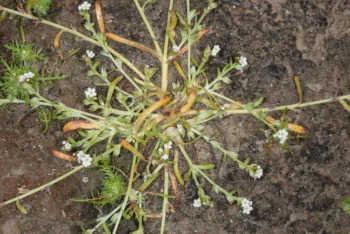
Dwarf Popcornflower: A Rare California Native for Wetland Gardens
Meet the dwarf popcornflower (Plagiobothrys humistratus), a petite annual wildflower that’s as specialized as it is charming. This little-known California native might not be destined for every garden, but for those creating authentic wetland landscapes or restoration projects, it’s a fascinating addition that supports local ecosystems in very specific ways.
What Makes Dwarf Popcornflower Special
Dwarf popcornflower belongs to the forget-me-not family and shares that group’s characteristic tiny white flowers. As an annual forb, it completes its entire life cycle in one growing season, sprouting, blooming, setting seed, and dying back each year. Don’t let its humble size fool you – this plant plays an important ecological role in California’s wetland communities.
You might also see this plant listed under its former scientific name, Allocarya humistrata, in older botanical references.
Where You’ll Find It (And Where It Belongs)
This California endemic is found exclusively within the Golden State, making it a true local specialty. Dwarf popcornflower has earned the designation of Obligate Wetland plant, meaning it almost always occurs in wetlands – from the Arid West to the Western Mountains and Coast regions.
- Species observed
- No observations
A Word About Rarity
Here’s something important to know: dwarf popcornflower has a Global Conservation Status of S2?, indicating it may be imperiled and rare throughout its range. This means if you’re interested in growing this plant, you should only obtain seeds or plants from reputable native plant sources that practice responsible collection methods. Never collect from wild populations.
Garden Suitability: Not Your Average Wildflower
Let’s be honest – dwarf popcornflower isn’t for every garden or every gardener. This specialized plant thrives in conditions that would spell disaster for most garden plants:
- Consistently wet to saturated soils
- Boggy or marsh-like conditions
- Areas that remain moist year-round
If you’re creating a rain garden, bog garden, or participating in wetland restoration, dwarf popcornflower could be perfect. For traditional perennial borders or drought-tolerant landscapes? Not so much.
Growing Conditions and Care
Success with dwarf popcornflower requires mimicking its natural wetland habitat:
- Moisture: Requires consistently wet soil – think marsh conditions rather than just moist
- Sun exposure: Full sun to partial shade
- Soil: Tolerates various soil types as long as they stay wet
- Climate zones: Best suited for USDA zones 8-10, matching California’s climate
As an annual, you’ll need to allow plants to self-seed or collect seeds for replanting each year. The timing and moisture requirements can be tricky, so this plant works best in established wetland settings rather than containers or typical garden beds.
Wildlife and Pollinator Benefits
While specific data on wildlife interactions is limited, dwarf popcornflower likely provides nectar for small native bees and other beneficial insects. Its seeds may also support waterfowl and other wetland wildlife. In its native wetland communities, it contributes to the complex web of plant relationships that support California’s unique ecosystems.
The Bottom Line
Dwarf popcornflower is a plant for specific situations and dedicated native plant enthusiasts. If you’re working on wetland restoration, creating authentic California plant communities, or have naturally boggy areas on your property, this rare annual could be a meaningful addition – provided you source it responsibly.
For most home gardeners, other California natives like meadowfoam (Limnanthes) or various sedges might provide similar ecological benefits with less demanding growing requirements. But for those special projects where authenticity and rarity matter, dwarf popcornflower offers a unique opportunity to support a truly specialized piece of California’s botanical heritage.