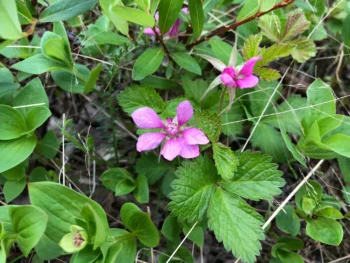
Dwarf Raspberry: A Tiny Treasure for Northern Gardens
If you’re looking for a charming native ground cover that doubles as a snack bar for both you and local wildlife, meet the dwarf raspberry (Rubus arcticus acaulis). This petite member of the rose family might just be the perfect addition to your northern garden – assuming you can handle its particular personality quirks!
What Makes Dwarf Raspberry Special?
Don’t let the name fool you – while dwarf raspberry is indeed small in stature, it’s big on character. This perennial herb grows as a low, creeping ground cover that rarely exceeds 6 inches in height. Unlike its towering raspberry cousins, this little guy keeps things close to the ground, spreading gently through underground rhizomes to form attractive colonies.
The plant produces delicate white flowers in late spring to early summer, followed by small but flavorful red berries that are absolutely delicious – if you can beat the birds to them! The trifoliate leaves (that’s three leaflets per leaf) turn lovely shades of red and orange in fall, adding seasonal interest to your garden.
Where Dwarf Raspberry Calls Home
Dwarf raspberry is a true northerner, native to Alaska, Canada, and the northern United States. You’ll find it growing naturally across a impressive range including Alberta, British Columbia, Alaska, Manitoba, Ontario, Colorado, Quebec, Saskatchewan, Yukon, Northwest Territories, Nunavut, Maine, Michigan, Minnesota, Montana, Oregon, Washington, Wyoming, Labrador, and Newfoundland. This wide distribution speaks to its adaptability – within its preferred climate range, of course.
- Species observed
- No observations
Is Dwarf Raspberry Right for Your Garden?
Here’s where things get interesting. Dwarf raspberry is absolutely perfect for the right gardener in the right location, but it’s definitely not a plant for everyone. Let’s break down the pros and cons:
The Good News:
- Extremely cold hardy (USDA zones 2-6)
- Native species supporting local ecosystems
- Edible berries with excellent flavor
- Attractive ground cover for naturalized areas
- Low maintenance once established
- Supports pollinators with its flowers
The Reality Check:
- Only thrives in cool, northern climates
- Needs consistently moist soil
- Berry production can be modest
- Not suitable for formal garden settings
- Can spread (though not aggressively)
Perfect Garden Situations
Dwarf raspberry shines in woodland gardens, native plant landscapes, and naturalized areas where you want to create habitat for local wildlife. It’s particularly wonderful in:
- Shade to partial shade areas under trees
- Native plant restoration projects
- Edible landscaping designs
- Ground cover areas in informal settings
- Rain gardens and moisture-loving plant communities
Growing Dwarf Raspberry Successfully
The secret to happy dwarf raspberry is thinking like the plant. In nature, it grows in cool, moist environments with rich, organic soil. Here’s how to recreate those conditions:
Soil and Site Requirements:
- Consistently moist (but not waterlogged) soil
- Acidic to neutral pH
- Rich in organic matter
- Partial shade to full sun (in cooler climates)
- Protection from hot afternoon sun in warmer areas
Planting Tips:
- Plant in spring after last frost
- Space plants 12-18 inches apart
- Amend soil with compost or leaf mold
- Mulch to retain moisture and suppress weeds
- Water regularly the first year to establish
Ongoing Care:
- Maintain consistent soil moisture
- Apply organic mulch annually
- Minimal fertilization needed (compost is sufficient)
- Allow natural spreading or divide clumps if needed
- No pruning required
Wildlife and Pollinator Benefits
One of the best reasons to grow dwarf raspberry is its value to local ecosystems. The flowers attract various pollinators, including native bees and flies, while the berries feed birds and small mammals. The low-growing foliage also provides cover for ground-dwelling creatures.
The Bottom Line
Dwarf raspberry isn’t going to work in every garden, but for northern gardeners looking to support native ecosystems while enjoying a unique edible ground cover, it’s a delightful choice. Just remember: this is a plant that knows what it likes (cool and moist) and won’t compromise. Work with its preferences rather than against them, and you’ll be rewarded with a charming, low-maintenance addition to your native plant palette.
If you’re in zones 7 and above, don’t despair – there are plenty of other native Rubus species that might work better in your climate. Always choose plants that are truly native to your specific region for the best results and maximum ecological benefit!