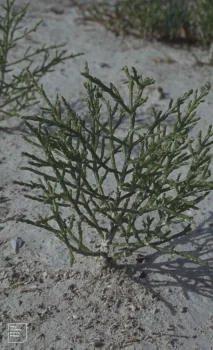
Dwarf Saltwort: A Quirky Native for Salty Situations
Meet dwarf saltwort (Salicornia bigelovii), one of nature’s most specialized little plants! This curious native annual looks more like tiny green pickles than a traditional garden flower, but don’t let its odd appearance fool you – this salt-loving wonder plays a crucial role in coastal ecosystems across North America.
What Makes Dwarf Saltwort Special
Also known by the synonym Salicornia mucronata, dwarf saltwort is a true native success story. This hardy annual forb calls the lower 48 states and Puerto Rico home, thriving in some of the most challenging growing conditions you can imagine.
As an obligate wetland plant, dwarf saltwort almost always occurs in wetlands across all regions where it grows. What makes it truly remarkable is its ability to thrive in saline conditions that would kill most other plants. Its thick, jointed stems store water and salt, creating a succulent-like appearance that’s both functional and oddly charming.
Where You’ll Find This Native Wonder
Dwarf saltwort has an impressive range, growing naturally in Alabama, California, Connecticut, Delaware, Florida, Georgia, Louisiana, Maine, Maryland, Massachusetts, Mississippi, New Hampshire, New Jersey, New Mexico, New York, North Carolina, Rhode Island, South Carolina, Texas, Virginia, and Puerto Rico.
- Species observed
- No observations
Should You Grow Dwarf Saltwort?
Here’s where things get interesting – and a bit challenging. While dwarf saltwort is undeniably beneficial for coastal restoration and specialized wetland gardens, it’s not your typical backyard plant. Here’s what you need to consider:
The Good News
- Excellent for coastal erosion control and salt marsh restoration
- Supports specialized wetland ecosystems
- Unique architectural interest with jointed, fleshy stems
- Turns attractive reddish colors in fall
- Extremely salt tolerant
The Reality Check
- Requires saline growing conditions that are difficult to replicate
- Needs consistently wet to waterlogged soil
- Limited ornamental appeal for traditional gardens
- Annual lifecycle means replanting each year
- Specialized habitat requirements
Growing Conditions and Care
If you’re determined to grow dwarf saltwort, you’ll need to recreate its natural salt marsh habitat:
- Soil: Saline, consistently moist to waterlogged conditions
- Light: Full sun
- Water: Requires saltwater or brackish water conditions
- Hardiness: Variable by region, generally hardy across its native range
- Maintenance: Minimal once established in proper conditions
Best Uses for Dwarf Saltwort
This specialized native shines in specific situations:
- Coastal restoration projects
- Salt marsh recreation in botanical gardens
- Educational gardens focused on wetland plants
- Areas with naturally saline soil conditions
- Living shoreline projects
The Bottom Line
Dwarf saltwort is a fascinating native plant that deserves respect and protection in its natural habitat. However, it’s probably not the right choice for most home gardens due to its very specific growing requirements. If you’re working on coastal restoration, managing naturally saline areas, or creating specialized educational displays, this little salt-lover could be perfect.
For typical garden situations, consider other native alternatives that provide similar ecological benefits but are more adaptable to standard garden conditions. Your local native plant society can suggest appropriate wetland and coastal natives that might work better in your specific situation.
Remember, sometimes the best way to support native plants like dwarf saltwort is to protect and restore their natural habitats rather than trying to transplant them into unsuitable garden environments.