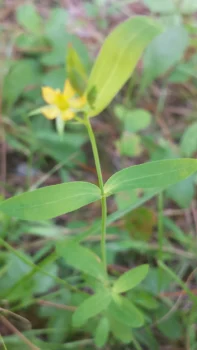
Dwarf St. Johnswort: A Humble Native Wildflower for Wet Spots
If you’ve got a soggy corner of your garden that makes you scratch your head every planting season, meet your new best friend: dwarf St. Johnswort (Hypericum mutilum). This unassuming little native wildflower might not win any beauty contests, but it’s got charm where it counts – and it absolutely loves those wet feet that send other plants running for higher ground.
What Exactly Is Dwarf St. Johnswort?
Dwarf St. Johnswort is a native North American wildflower that belongs to the St. John’s wort family. Unlike its more famous cousin (the herbal remedy St. John’s wort), this petite version stays true to its dwarf name, typically reaching just 2.6 feet tall. It’s what botanists call a forb – basically a soft-stemmed plant without woody tissue, kind of like nature’s version of a gentle, herbaceous friend.
This little guy can be either an annual or perennial, depending on growing conditions and climate. It has a single crown growth form and spreads slowly, making it a well-behaved addition to any garden.
Where Does It Call Home?
Dwarf St. Johnswort is a true North American native, naturally found from southeastern Canada down through most of the eastern United States. You’ll spot it growing wild everywhere from Alabama to Wisconsin, and from Maine down to Texas. It’s even made its way to the West Coast and Hawaii, though it’s considered non-native in the latter.
- Species observed
- No observations
Why Your Garden Might Want This Modest Beauty
Let’s be honest – dwarf St. Johnswort isn’t going to stop traffic with its looks. Its small yellow flowers are pretty in a quiet, understated way, but they’re not particularly showy. So why grow it? Here’s where this plant really shines:
- Wetland warrior: This plant absolutely loves wet conditions and is classified as a facultative wetland species across most regions
- Low maintenance: Once established, it pretty much takes care of itself
- Native support: It provides food and habitat for local wildlife and pollinators
- Problem solver: Perfect for those challenging wet areas where other plants struggle
Garden Roles and Landscape Ideas
Think of dwarf St. Johnswort as nature’s problem-solver. It’s perfect for:
- Rain gardens and bioswales
- Pond or stream edges
- Naturalized meadow areas
- Wetland restoration projects
- Native plant gardens with poor drainage
Its semi-erect, single crown growth habit makes it ideal as a ground cover or filler plant rather than a specimen. The moderate growth rate means it won’t overwhelm neighboring plants, but it will gradually fill in wet areas where you need coverage.
Growing Conditions: What Makes It Happy
Dwarf St. Johnswort is surprisingly specific about its preferences, but once you understand what it wants, it’s quite easy to grow:
- Soil: Prefers fine to medium-textured soils; not great with sandy, coarse soils
- pH: Tolerates acidic to neutral conditions (4.6-7.2)
- Moisture: Medium moisture needs – loves consistently moist to wet conditions
- Sun: Intermediate shade tolerance, so partial sun to partial shade works well
- Hardiness: Cold hardy to -23°F (USDA zones 4-9)
- Drainage: Actually prefers poor drainage – a rare trait in the plant world!
Planting and Care Tips
The good news? Dwarf St. Johnswort is pretty low-drama once you get it going:
- Propagation: Can be grown from sprigs, though it’s not commonly available commercially
- Planting density: Space plants for about 4,800-7,000 per acre if doing large-scale plantings
- Establishment: Needs at least 140 frost-free days to establish properly
- Maintenance: Minimal care needed once established – just let it do its thing
- Spread: It doesn’t spread vegetatively, so no worries about it taking over
Pollinator and Wildlife Benefits
While dwarf St. Johnswort may have small, inconspicuous yellow flowers that bloom in mid-summer, they still provide nectar for small native bees, flies, and other minor pollinators. The brown seeds that follow provide food for birds and small wildlife throughout fall.
The Bottom Line
Dwarf St. Johnswort isn’t going to be the star of your garden show, but it might just be the hardworking understudy that saves the day. If you’re dealing with wet, challenging areas where other plants fear to tread, this humble native could be exactly what you need. It’s the plant equivalent of a reliable friend – not flashy, but always there when you need it most.
Plus, by choosing this native species, you’re supporting local ecosystems and providing habitat for wildlife that co-evolved with these plants. Sometimes the most valuable garden additions are the ones that work quietly behind the scenes, and dwarf St. Johnswort definitely fits that bill.