Dwarf Sundew: A Tiny Carnivorous Marvel for Your Bog Garden
Meet the dwarf sundew (Drosera brevifolia), a pint-sized predator that’s sure to spark conversations in your garden! This fascinating native carnivorous plant might be small, but it packs a big punch when it comes to unique beauty and natural pest control.
What Makes Dwarf Sundew Special?
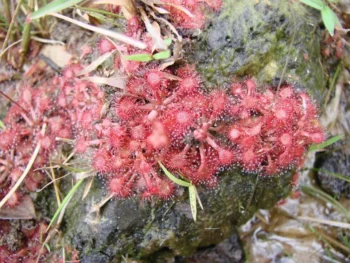
The dwarf sundew is like nature’s own tiny jewel box. Its small, spoon-shaped leaves are covered in glistening droplets that look like morning dew but are actually sticky traps for unsuspecting insects. When the sun hits these dewdrops, they sparkle like diamonds, creating a magical effect in your garden. In spring and summer, delicate white flowers bloom on slender stalks, adding an ethereal touch to this already enchanting plant.
As a native forb (that’s garden-speak for a non-woody flowering plant), the dwarf sundew has adapted perfectly to life in American wetlands over thousands of years.
Where Does Dwarf Sundew Call Home?
This charming carnivore is native to the southeastern and south-central United States, naturally occurring in Alabama, Arkansas, Florida, Georgia, Kansas, Kentucky, Louisiana, Mississippi, North Carolina, Oklahoma, South Carolina, Tennessee, Texas, and Virginia. It’s a true wetland specialist, classified as an obligate wetland plant across all regions where it grows.
- Species observed
- No observations
Why Consider Dwarf Sundew for Your Garden?
Here are some compelling reasons to welcome this tiny hunter into your landscape:
- Natural pest control: It catches small flying insects, including gnats and mosquitoes
- Unique beauty: The sparkling, jewel-like appearance is unlike anything else in your garden
- Native plant benefits: Supports local ecosystems and requires no fertilizers
- Conversation starter: Guests will be fascinated by your carnivorous plant collection
- Low maintenance: Once established in proper conditions, it largely takes care of itself
Perfect Garden Homes for Dwarf Sundew
The dwarf sundew isn’t your typical border plant—it has very specific needs that make it perfect for specialized garden areas:
- Bog gardens and wetland areas
- Rain gardens with consistently moist soil
- Container water gardens
- Carnivorous plant collections
- Native plant restoration projects
Growing Conditions: Getting It Right
Success with dwarf sundew depends on mimicking its natural wetland habitat. Here’s what this little carnivore craves:
- Sunlight: Full sun for best coloration and dewdrop production
- Water: Constantly moist, acidic soil (never let it dry out!)
- Soil: Nutrient-poor, acidic growing medium like sphagnum moss or specialized carnivorous plant mix
- Climate: Hardy in USDA zones 6-10
- Humidity: High humidity levels preferred
Planting and Care Tips
Growing dwarf sundew successfully requires a few special considerations:
- Use distilled water only: Tap water contains minerals that can harm carnivorous plants
- Never fertilize: These plants get their nutrients from catching insects, not soil
- Provide a water tray: Keep the pot sitting in a shallow dish of distilled water
- Choose the right soil: Use a 50/50 mix of sphagnum moss and perlite, or commercial carnivorous plant soil
- Don’t trigger the traps: Resist the urge to touch the sticky leaves—let them do their job naturally
Is Dwarf Sundew Right for You?
The dwarf sundew is perfect for gardeners who:
- Love unique and unusual plants
- Have or want to create bog garden conditions
- Appreciate native plants and natural ecosystems
- Enjoy the challenge of growing something different
- Want natural, chemical-free pest control
However, this plant might not be the best choice if you prefer low-maintenance perennials for traditional garden beds, as it requires very specific growing conditions that most garden plants would find too extreme.
Supporting Wildlife
While the dwarf sundew does catch small insects, it also produces tiny flowers that can attract beneficial pollinators. The plant plays an important role in wetland ecosystems, helping to maintain the delicate balance of these unique habitats.
If you’re ready to add a touch of carnivorous wonder to your garden, the dwarf sundew offers a fascinating glimpse into nature’s ingenuity. With proper care and the right growing conditions, this tiny native treasure will reward you with years of sparkling beauty and natural pest control!