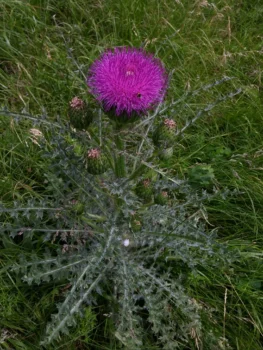
Dwarf Thistle: A Mighty Little Native with Big Garden Impact
Don’t let the name fool you—dwarf thistle (Cirsium drummondii) might be small in stature, but it packs a serious punch in the native garden. This charming little wildflower proves that good things really do come in small packages, offering gardeners a low-maintenance way to support local wildlife while adding authentic prairie character to their landscapes.
What Makes Dwarf Thistle Special?
Dwarf thistle is a perennial forb that’s truly North American through and through. This native beauty calls both Canada and the lower 48 states home, making it a fantastic choice for gardeners who want to support their local ecosystem. Unlike its more aggressive thistle cousins, this well-behaved species won’t take over your garden—it knows its place and stays put.
Where You’ll Find It Growing Wild
In nature, you’ll discover dwarf thistle thriving across an impressive range that spans from the Canadian provinces of Alberta, British Columbia, Manitoba, Ontario, and Saskatchewan, down through the Northwest Territories, and into the American states of South Dakota and Wyoming. This wide distribution speaks to its adaptability and hardiness.
- Species observed
- No observations
Garden Appeal and Design Role
While some folks might wrinkle their noses at the word thistle, dwarf thistle brings genuine charm to the right garden setting. Its compact form and purple flower heads create lovely textural interest without the intimidating presence of larger thistle species. Here’s what makes it garden-worthy:
- Authentic prairie character for naturalistic designs
- Excellent backbone plant for wildflower meadows
- Perfect height for middle or front borders in native plant gardens
- Adds vertical interest with its distinctive flower heads
The Perfect Garden Match
Dwarf thistle isn’t meant for every garden—and that’s perfectly okay! It shines brightest in:
- Prairie restoration projects
- Native plant gardens
- Naturalistic landscapes
- Wildlife habitat gardens
- Low-maintenance perennial borders
If you’re dreaming of a formal English garden or manicured landscape, this might not be your plant. But if you love the wild, natural look and want to support local ecology, dwarf thistle could be your new best friend.
Growing Conditions and Care
Here’s where dwarf thistle really earns its keep—it’s remarkably easy to please once you understand its preferences:
- Sunlight: Full sun is best, though it can tolerate some light shade
- Soil: Well-drained soils; actually prefers lean, poor soils over rich garden loam
- Water: Drought tolerant once established; doesn’t need supplemental watering
- USDA Zones: Hardy in zones 3-7
Planting and Establishment
Getting dwarf thistle started in your garden is refreshingly straightforward:
- Direct seed in fall or early spring
- Lightly rake seeds into soil surface
- Keep soil moist during germination
- Once established, minimal care needed
- May self-seed in favorable conditions
Wildlife Benefits
This is where dwarf thistle really shines! The purple flower heads are magnets for:
- Native bees seeking nectar and pollen
- Butterflies, particularly during late summer blooms
- Finches and other seed-eating birds who relish the fluffy seeds
- Various beneficial insects that help maintain garden balance
Wetland Flexibility
One of dwarf thistle’s best qualities is its adaptability to different moisture conditions. Classified as facultative in both the Great Plains and Western Mountains regions, it can handle both wetland and non-wetland conditions, making it a versatile choice for various garden situations.
Should You Plant Dwarf Thistle?
If you’re passionate about native plants, wildlife gardening, or creating authentic prairie landscapes, dwarf thistle deserves a spot on your planting list. It’s particularly valuable for gardeners in its native range who want to recreate a piece of natural heritage in their own backyard.
However, it’s not the right choice for every gardener. Skip it if you prefer highly cultivated, formal gardens or if you’re outside its natural hardiness range. But for those who appreciate the subtle beauty of native wildflowers and want to support local pollinators, this little thistle might just be the perfect addition to your garden palette.
Remember, when we choose native plants like dwarf thistle, we’re not just gardening—we’re participating in the conservation of our natural heritage, one garden at a time.