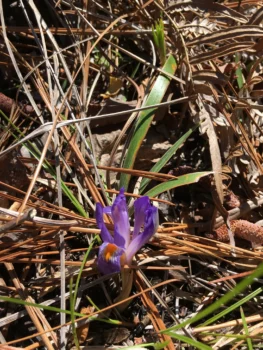
Dwarf Violet Iris: A Charming Native Spring Bloomer for Your Garden
If you’re looking to add some early spring magic to your garden with a truly native touch, the dwarf violet iris (Iris verna var. verna) might just be the perfect little showstopper you’ve been searching for. This delightful perennial brings a splash of violet-blue color to the landscape just when you need it most – those first warm days of spring when everything else is still waking up.
What Makes Dwarf Violet Iris Special?
Don’t let the dwarf in the name fool you – while this iris may be small in stature, it’s big on charm. This native beauty produces gorgeous violet-blue flowers adorned with bright yellow centers that practically glow in the dappled light of woodland settings. The flowers sit atop compact clumps of narrow, sword-like leaves that add texture to your garden even when the plant isn’t in bloom.
As a true native of the southeastern United States, this perennial forb has been gracing American landscapes long before any of us thought about gardening. It’s naturally found across several states including Virginia, North Carolina, South Carolina, Georgia, Florida, Maryland, and the District of Columbia.
- Species observed
- No observations
Why Your Garden (and Local Wildlife) Will Love It
There’s something special about growing plants that truly belong in your area, and dwarf violet iris fits that bill perfectly if you’re in its native range. Here’s why this little iris deserves a spot in your landscape:
- Early season nectar source: When spring arrives and hungry pollinators are desperately seeking their first meals, your dwarf violet iris will be there to help
- Low maintenance: Once established, this tough little native practically takes care of itself
- Perfect for naturalized areas: It loves to spread gradually, creating lovely drifts over time
- Woodland garden star: Thrives in the partial shade conditions that many gardeners struggle to fill
Where Does Dwarf Violet Iris Shine?
This adaptable native works beautifully in several garden settings. It’s particularly at home in woodland gardens where it can carpet the forest floor with early spring color. Rock gardens also provide an excellent showcase for its compact form and delicate blooms. If you’re working on a native plant garden or trying to create naturalized areas that support local ecosystems, dwarf violet iris is an excellent choice.
The plant works wonderfully as a groundcover, slowly spreading to form colonies that look completely natural – because, well, they are! It pairs beautifully with other native spring bloomers and provides a lovely backdrop for taller woodland plants.
Growing Your Dwarf Violet Iris Successfully
The best news about growing dwarf violet iris? It’s remarkably unfussy once you understand its preferences. This native thrives in USDA hardiness zones 6 through 9, making it suitable for a wide range of gardens in its native territory.
Ideal Growing Conditions
- Light: Partial shade to filtered sunlight works best
- Soil: Well-drained, acidic sandy soils are ideal
- Water: Drought tolerant once established, but appreciates consistent moisture in spring
- pH: Prefers slightly acidic conditions
Planting and Care Tips
Fall is the ideal time to plant dwarf violet iris rhizomes, giving them time to establish before their spring show begins. Choose a location with morning sun and afternoon shade, or an area that receives filtered light throughout the day.
Prepare the planting area by ensuring good drainage – this iris doesn’t appreciate wet feet. If your soil is heavy clay, consider amending it with coarse sand or planting in a raised bed. Plant the rhizomes just below the soil surface, spacing them about 6 inches apart if you want quicker coverage.
Once established, maintenance is minimal. Allow the foliage to die back naturally after blooming to feed the rhizomes for next year’s display. The plant will slowly spread to form colonies, so give it room to roam if you want that natural, naturalized look.
Is Dwarf Violet Iris Right for Your Garden?
If you garden within this plant’s native range and love the idea of supporting local ecosystems while adding early spring beauty to your landscape, dwarf violet iris could be a wonderful addition. It’s particularly perfect for gardeners who appreciate subtle, natural beauty over flashy displays and those who want to reduce maintenance while increasing wildlife value.
This charming native proves that sometimes the most rewarding garden plants are the ones that have been quietly thriving in your area all along. Give dwarf violet iris a try, and you might just discover your new favorite spring bloomer.