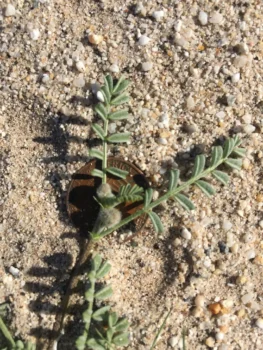
Dwarf White Milkvetch: A Tiny Native Gem for Desert Gardens
Meet the dwarf white milkvetch (Astragalus didymocarpus var. dispermus), a charming little native annual that might just be the perfect addition to your southwestern garden. Don’t let its small stature fool you – this pint-sized powerhouse packs a punch when it comes to supporting local ecosystems while adding delicate beauty to desert landscapes.
What Makes Dwarf White Milkvetch Special?
This delightful native plant belongs to the legume family and is indigenous to the American Southwest. You might also see it listed under its botanical synonym, Astragalus dispermus. As a true native, it’s perfectly adapted to thrive in the challenging conditions of desert environments while providing valuable resources for local wildlife.
Where Does It Call Home?
Dwarf white milkvetch is native to three southwestern states: Arizona, California, and Nevada. This gives it excellent credibility as a water-wise choice for gardeners in these regions who want to work with nature rather than against it.
- Species observed
- No observations
Garden Appeal and Design Uses
While dwarf white milkvetch may not win any awards for showiness, its understated charm makes it a wonderful supporting player in desert garden compositions. This low-growing annual produces clusters of small white flowers that create a delicate, naturalistic effect. It works beautifully as:
- Ground cover in rock gardens
- Filler in native plant borders
- Natural carpet in xeriscaped areas
- Accent plant in desert-themed container gardens
Perfect Garden Matches
This little native thrives in specific garden styles where its natural beauty can shine. Consider incorporating dwarf white milkvetch into:
- Desert and xeriscape gardens
- Native plant landscapes
- Rock and gravel gardens
- Natural habitat restoration areas
Wildlife and Pollinator Benefits
Don’t underestimate this small plant’s ecological value! Dwarf white milkvetch provides nectar for small native bees and butterflies, making it an excellent choice for pollinator-friendly gardens. As a member of the legume family, it also helps improve soil by fixing nitrogen naturally.
Growing Conditions and Care
One of the best things about native plants is how well they’re adapted to local conditions, and dwarf white milkvetch is no exception. Here’s what it needs to thrive:
- Sunlight: Full sun exposure
- Soil: Well-draining sandy or rocky soils
- Water: Low water requirements once established
- Climate: USDA hardiness zones 8-10
Planting and Care Tips
Growing dwarf white milkvetch successfully is all about mimicking its natural habitat conditions:
- Direct seed in fall for best germination results
- Plant in areas with excellent drainage to prevent root rot
- Provide minimal supplemental water after establishment
- Avoid overwatering, which can be fatal to this desert-adapted plant
- Allow plants to self-seed for natural populations
Why Choose Dwarf White Milkvetch?
If you’re gardening in the Southwest and want to create a landscape that celebrates regional flora while supporting local ecosystems, dwarf white milkvetch deserves serious consideration. This native annual offers low-maintenance beauty, supports pollinators, and helps create authentic desert garden environments. Plus, once established, it may self-seed and create lovely naturalized patches that change subtly from year to year.
While it may not be the flashiest plant in your garden, dwarf white milkvetch represents the quiet elegance of desert flora and the satisfaction that comes from gardening in harmony with your local environment.