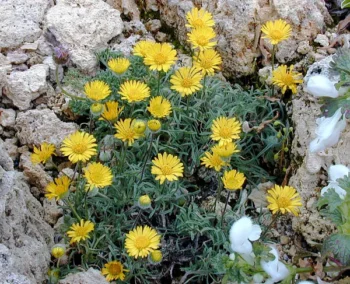
Dwarf Yellow Fleabane: A Tiny Treasure for Pacific Northwest Gardens
If you’re looking for a charming, low-maintenance native plant that packs a big punch in small spaces, let me introduce you to dwarf yellow fleabane (Erigeron chrysopsidis). This delightful little perennial might have an unfortunate common name, but don’t let that fool you – there’s nothing pest-like about this Pacific Northwest gem!
What Makes Dwarf Yellow Fleabane Special?
Dwarf yellow fleabane is a native forb that calls Oregon and Washington home. As a true perennial, this hardy little plant will return year after year, gradually forming attractive low mats of foliage topped with cheerful daisy-like blooms. The flowers feature bright yellow centers surrounded by delicate white to pale pink petals, creating a classic wildflower look that never goes out of style.
This species grows naturally in the Pacific Northwest, making it perfectly adapted to the region’s unique climate conditions. You might also see it listed under its scientific synonym, Erigeron chrysopsidis var. brevifolius, but it’s the same wonderful plant.
- Species observed
- No observations
Why Your Garden Will Love This Little Native
There are plenty of reasons to fall head-over-heels for dwarf yellow fleabane:
- Pollinator magnet: The small but numerous flowers attract native bees, butterflies, and other beneficial insects
- Low maintenance: Once established, it’s quite drought-tolerant and needs minimal care
- Space-efficient: Its compact, low-growing habit makes it perfect for small gardens or tight spaces
- Long blooming period: Enjoy flowers from late spring through summer
- Native plant benefits: Supports local ecosystems and wildlife
Perfect Garden Spots for Dwarf Yellow Fleabane
This versatile little plant shines in several garden settings:
- Rock gardens and alpine gardens
- Native plant gardens and natural landscapes
- Ground cover in sunny, well-draining areas
- Front borders and edging
- Xerophytic or drought-tolerant garden designs
- Wildflower meadows and naturalized areas
Growing Dwarf Yellow Fleabane Successfully
The good news is that dwarf yellow fleabane is surprisingly easy to grow, especially if you match its preferred conditions:
Climate Requirements: This hardy perennial thrives in USDA hardiness zones 5-9, making it suitable for most temperate gardens.
Light and Soil: Plant your dwarf yellow fleabane in full sun to partial shade with well-draining soil. It’s quite adaptable but performs best in sandy or rocky soils that don’t stay soggy. Heavy clay soils should be amended with sand or gravel to improve drainage.
Water Needs: While young plants need regular water to establish, mature dwarf yellow fleabane is quite drought-tolerant. Water deeply but infrequently during dry spells, and avoid overwatering which can lead to root problems.
Planting and Care Tips
When to Plant: Spring is the ideal time to plant dwarf yellow fleabane, giving it a full growing season to establish before winter.
Spacing: Give plants adequate space to spread naturally – they’ll form attractive low mats over time.
Maintenance: This is a refreshingly low-maintenance plant! Deadhead spent flowers to encourage continued blooming, and you can cut back the foliage in late fall or early spring. Division is rarely necessary, but you can divide established clumps in spring if you want to propagate new plants.
Fertilizing: As a native plant, dwarf yellow fleabane typically doesn’t need additional fertilization. Rich soils can actually promote excessive leaf growth at the expense of flowers.
A Small Plant with Big Garden Impact
Don’t let its diminutive size fool you – dwarf yellow fleabane can make a significant contribution to your garden’s beauty and ecological value. Whether you’re creating a Pacific Northwest native plant showcase, need a reliable ground cover for challenging spots, or simply want to support local pollinators, this charming little fleabane deserves a spot in your garden.
By choosing native plants like dwarf yellow fleabane, you’re not just creating a beautiful garden – you’re also supporting the local ecosystem and helping preserve the natural heritage of the Pacific Northwest. Now that’s what I call a win-win!