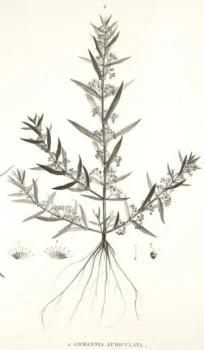
Eared Redstem: A Native Wetland Gem for Your Water Garden
If you’re looking to add a splash of delicate color to your wetland garden or pond edge, meet the eared redstem (Ammannia auriculata). This charming little annual might not be the showiest plant in your garden, but it packs a punch when it comes to supporting local ecosystems and adding authentic native character to wet spaces.
What Is Eared Redstem?
Eared redstem is a native annual forb that belongs to the loosestrife family. Don’t let the term forb intimidate you – it simply means it’s a non-woody flowering plant, similar to what many gardeners call an herb. This little beauty grows as a compact annual, meaning it completes its entire life cycle in one growing season, then produces seeds for the next year’s generation.
The plant gets its common name from its distinctive reddish stems and small ear-like leaf bases. While it may also go by the synonym Ammannia auriculata var. arenaria in some botanical references, the species name remains consistent across its range.
Where Does Eared Redstem Call Home?
This native gem has quite an impressive range across the American landscape. You’ll find eared redstem naturally occurring in Arizona, Kansas, Louisiana, Mississippi, Nebraska, New Mexico, Oklahoma, South Dakota, and Texas, with additional populations in Puerto Rico. It’s truly a plant of both the lower 48 states and our Caribbean territories.
- Species observed
- No observations
The Wetland Specialist
Here’s where eared redstem really shines – it’s what botanists call an obligate wetland species across all regions where it grows. This means you’ll almost always find it in wet conditions, whether that’s along pond edges, in seasonal wetlands, or in areas that flood regularly. Think of it as nature’s way of saying water lives here!
Why Grow Eared Redstem in Your Garden?
While eared redstem might not be the star of your flower border, it serves some important purposes:
- Authentic wetland character: Perfect for native plant gardens focused on wetland restoration
- Ecosystem support: Its small flowers provide nectar for various pollinators and beneficial insects
- Low maintenance: Once you get the water requirements right, it’s quite self-sufficient
- Natural seeding: As an annual, it will self-seed in suitable conditions
- Educational value: Great for teaching about wetland ecosystems
Perfect Garden Settings
Eared redstem thrives in specialized garden settings:
- Native wetland restoration projects
- Pond and water feature margins
- Rain gardens and bioswales
- Bog gardens
- Areas with seasonal flooding
- Naturalistic landscapes near water sources
Growing Conditions and Care
Success with eared redstem is all about understanding its water needs:
Sunlight: Full sun is preferred, though it can tolerate some light shade
Soil: Consistently moist to wet soils are essential. This plant doesn’t do drought!
Water: Think swamp rather than garden bed. Eared redstem tolerates seasonal flooding and needs constant moisture
Hardiness: Suitable for USDA zones 7-10, though as an annual, it’s more limited by growing season length than winter cold
Planting and Propagation Tips
Getting started with eared redstem requires a different approach than typical garden plants:
- Timing: Direct seed in spring after the last frost
- Location: Choose the wettest spot in your garden or create a dedicated bog area
- Seeding: Scatter seeds on moist soil surface; they need light to germinate
- Maintenance: Keep soil consistently wet throughout the growing season
- Natural cycle: Allow plants to set seed for next year’s generation
Is Eared Redstem Right for You?
This native annual is perfect if you have wet areas in your landscape that you want to plant with authentic regional flora. However, it’s not suitable for typical garden beds or areas without consistent moisture. Consider eared redstem if you’re working on wetland restoration, have a pond or water feature, or are creating a rain garden.
While it may not provide the bold colors of hybrid flowers, eared redstem offers something more valuable – a genuine connection to your local ecosystem and support for native wildlife. Sometimes the best garden plants are the ones that whisper rather than shout, and eared redstem definitely falls into that category.