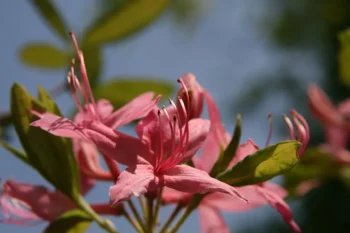
Early Azalea: A Fragrant Native Gem for Your Woodland Garden
If you’re looking for a native shrub that delivers both stunning beauty and ecological value, the early azalea (Rhododendron prinophyllum) might just be your new garden favorite. This delightful native brings the sweet scent of spring to gardens across much of the eastern United States, while supporting local wildlife in ways that non-native plants simply can’t match.
What Makes Early Azalea Special?
Early azalea is a true native treasure, naturally occurring across 23 states from Maine down to Georgia and stretching west to Texas and Oklahoma. As a perennial woody shrub, it typically grows as a multi-stemmed plant reaching 4-5 feet in height, though it can occasionally grow taller under ideal conditions.
- Species observed
- No observations
What sets this azalea apart from its more common cousins is its incredible fragrance and timing. True to its name, early azalea blooms in early spring, often before its leaves fully emerge. The flowers range from soft pink to pure white, creating a cloud of color and perfume that signals winter’s end.
Why Your Garden (and Local Wildlife) Will Love It
Here’s where early azalea really shines as a garden choice:
- Pollinator magnet: Those early spring blooms provide crucial nectar when few other flowers are available, supporting bees, butterflies, and other pollinators emerging from winter
- Low maintenance: Once established, this native shrub requires minimal care
- Versatile placement: Works beautifully in woodland gardens, naturalized areas, or mixed native shrub borders
- Seasonal interest: Offers spring flowers, summer foliage, and attractive fall color
Growing Conditions and Care
Early azalea is surprisingly adaptable, which explains its wide natural range. The plant has a facultative wetland status, meaning it’s happy in both moist and moderately dry conditions, though it performs best with consistent moisture.
Ideal growing conditions include:
- Partial shade to dappled sunlight (avoid harsh afternoon sun)
- Acidic, well-draining soil
- Consistent moisture without waterlogging
- USDA hardiness zones 4-8
Planting and Care Tips
Getting your early azalea established is straightforward:
- Timing: Plant in spring or fall for best results
- Soil prep: Amend clay soils with organic matter to improve drainage
- Mulching: Apply 2-3 inches of organic mulch to retain moisture and suppress weeds
- Watering: Keep soil consistently moist the first year, then water during dry spells
- Pruning: Minimal pruning needed; if necessary, prune immediately after flowering
A Word About Conservation
While early azalea is widespread across its range, it’s worth noting that in New Jersey, it has a rarity status of S3 Highlands Listed, meaning it’s somewhat uncommon in that region. If you’re gardening in New Jersey or other areas where the plant might be less common, make sure to source your plants from reputable nurseries that grow from responsibly collected seed or cuttings rather than wild-harvested plants.
Is Early Azalea Right for Your Garden?
Early azalea is an excellent choice for gardeners who want to support native wildlife while enjoying a beautiful, fragrant shrub. It’s particularly perfect if you have a woodland garden, partial shade areas, or simply want to add early spring interest to your landscape. The combination of its lovely flowers, sweet fragrance, and ecological benefits makes it a winner for both gardeners and local ecosystems.
Just remember that like most azaleas, early azalea prefers acidic soil and consistent moisture. If your garden has alkaline soil or tends to be quite dry, you might need to amend conditions or choose a different location. But with its adaptable nature and wide hardiness range, chances are good that early azalea will thrive in your native garden adventure.