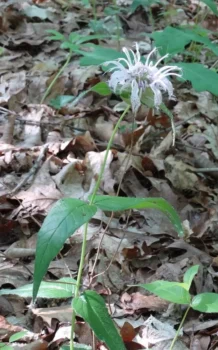
Eastern Beebalm: A Hidden Gem for Your Native Garden
If you’re looking to add a touch of understated elegance to your garden while supporting local wildlife, eastern beebalm (Monarda bradburiana) might just be the perfect plant you’ve never heard of. This charming native perennial offers delicate beauty and ecological benefits that make it a standout choice for gardeners who appreciate subtlety over showiness.
What is Eastern Beebalm?
Eastern beebalm is a native North American perennial that belongs to the mint family. Unlike its flashier cousin, bee balm (Monarda fistulosa), eastern beebalm brings a more refined presence to the garden with its pale pink to white tubular flowers adorned with distinctive purple spots. The plant forms clumps of aromatic foliage that release a pleasant fragrance when brushed against.
This herbaceous perennial lacks woody stems and dies back to the ground each winter, returning fresh and vigorous each spring. You might also encounter it under older botanical names like Monarda rigida or Monarda villosa, but Monarda bradburiana is the accepted name today.
Where Does Eastern Beebalm Call Home?
Eastern beebalm is native to a substantial portion of the south-central and southeastern United States. Its natural range spans across Alabama, Arkansas, Illinois, Indiana, Iowa, Kansas, Kentucky, Louisiana, Missouri, Oklahoma, Tennessee, Texas, and Virginia. This wide distribution speaks to the plant’s adaptability and hardiness.
- Species observed
- No observations
Why Choose Eastern Beebalm for Your Garden?
There are several compelling reasons to consider adding eastern beebalm to your landscape:
- Native plant benefits: As a true native, it supports local ecosystems and requires minimal resources once established
- Pollinator magnet: The tubular flowers are perfectly designed to attract bees, butterflies, and hummingbirds
- Low maintenance: Once established, it’s quite drought tolerant and rarely needs intervention
- Unique beauty: The spotted flowers offer something different from typical garden fare
- Aromatic foliage: The minty fragrance adds sensory appeal to your garden
Perfect Garden Settings
Eastern beebalm shines in several garden scenarios. It’s particularly well-suited for:
- Woodland gardens: Thrives in the dappled light beneath trees
- Native plant gardens: Fits perfectly with other indigenous species
- Pollinator gardens: Essential for supporting beneficial insects and hummingbirds
- Naturalized areas: Excellent for low-maintenance, natural-looking landscapes
Growing Conditions and Care
One of eastern beebalm’s greatest assets is its easygoing nature. Here’s what this adaptable perennial prefers:
- Light: Partial shade to full sun (though it appreciates some afternoon shade in hot climates)
- Soil: Well-drained soils of various types
- Water: Moderate moisture when young, drought tolerant once established
- Climate: Hardy in USDA zones 4-8
Planting and Care Tips
Getting eastern beebalm established in your garden is refreshingly straightforward:
- Planting time: Spring or fall are ideal
- Spacing: Allow 12-18 inches between plants
- Watering: Regular water the first season, then reduce as the plant establishes
- Maintenance: Deadhead spent flowers to encourage continued blooming
- Division: Divide clumps every 3-4 years to maintain vigor
- Self-seeding: May naturalize through self-seeding if you allow some flowers to go to seed
The Wildlife Connection
Eastern beebalm truly earns its place in the garden through its wildlife benefits. The tubular flowers are specially designed to attract long-tongued pollinators, making it a valuable addition to any pollinator garden. Bees, butterflies, and hummingbirds all find the nectar irresistible, while the seeds may provide food for small birds later in the season.
Is Eastern Beebalm Right for Your Garden?
Eastern beebalm is an excellent choice for gardeners who appreciate native plants, want to support pollinators, and prefer low-maintenance perennials. Its subtle beauty and ecological benefits make it particularly appealing to those creating naturalized or woodland gardens. While it may not have the bold presence of some garden favorites, its quiet charm and valuable wildlife benefits make it a worthy addition to thoughtfully designed landscapes.
If you’re within its native range and looking for a reliable, beneficial, and beautiful perennial that asks for little but gives much back to your garden ecosystem, eastern beebalm deserves serious consideration for your next planting project.