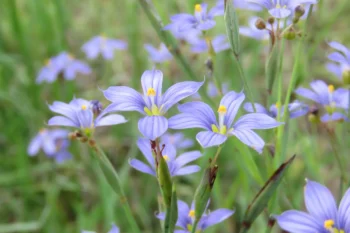
Eastern Blue-Eyed Grass: A Charming Native Wildflower for Wet Spots
If you’ve ever wandered through a moist meadow or the edge of a wetland and spotted tiny blue flowers peeking out from what looks like ordinary grass, you’ve likely encountered eastern blue-eyed grass (Sisyrinchium atlanticum). Don’t let the name fool you—this delightful little plant isn’t actually a grass at all, but a member of the iris family that’s perfectly suited for those tricky wet spots in your garden.
What Makes Eastern Blue-Eyed Grass Special
Eastern blue-eyed grass is a native North American perennial that brings subtle charm to any landscape. This petite forb produces clusters of small, star-shaped blue flowers with bright yellow centers that seem to wink at you from among slender, grass-like leaves. Each flower is only about half an inch across, but what they lack in size, they make up for in quantity and delicate beauty.
The plant typically grows 6-18 inches tall and forms neat clumps that slowly spread over time. Its narrow, sword-like foliage creates an interesting textural contrast in the garden, and the flowers bloom from late spring through early summer, providing a lovely carpet of blue during their peak season.
Where Eastern Blue-Eyed Grass Calls Home
As a true native, eastern blue-eyed grass has an impressive range across North America. You’ll find it naturally occurring from southeastern Canada down to Florida and west to Texas, covering much of the eastern United States including Alabama, Arkansas, Connecticut, Delaware, Florida, Georgia, Illinois, Indiana, Kentucky, Louisiana, Maine, Maryland, Massachusetts, Michigan, Mississippi, Missouri, New Hampshire, New Jersey, New York, North Carolina, Ohio, Pennsylvania, Rhode Island, South Carolina, Tennessee, Vermont, Virginia, and Wisconsin.
- Species observed
- No observations
Perfect Spots for This Native Beauty
Eastern blue-eyed grass is classified as a facultative wetland plant, which means it usually prefers moist to wet conditions but can tolerate drier soils. This flexibility makes it an excellent choice for several garden situations:
- Rain gardens – Its tolerance for both wet and dry periods makes it perfect for managing stormwater runoff
- Pond or water feature edges – Creates a natural transition from water to upland areas
- Native wildflower meadows – Adds delicate texture and seasonal color
- Naturalized areas – Excellent for low-maintenance spaces that mimic natural ecosystems
- Bog or wetland gardens – Thrives in consistently moist conditions
Growing Conditions and Care
One of the best things about eastern blue-eyed grass is how easy it is to grow once you understand its preferences. Hardy in USDA zones 3-9, this adaptable native can handle a wide range of conditions:
Sunlight: Full sun to partial shade, though it flowers best with at least 6 hours of direct sunlight daily.
Soil: Prefers moist to wet soils but tolerates average garden conditions. It’s not picky about soil type and will grow in clay, loam, or sandy soils as long as moisture is adequate.
Water: Consistent moisture is ideal, especially during the growing season. Once established, it can tolerate brief dry periods.
Planting and Maintenance Tips
Eastern blue-eyed grass is refreshingly low-maintenance once established. Here’s how to ensure success:
- Planting: Start with nursery-grown plants or seeds in spring or fall. Space plants 6-12 inches apart
- Watering: Keep soil consistently moist during the first growing season. Mature plants need less attention
- Fertilizing: Generally unnecessary—this native thrives in average soils without supplemental feeding
- Maintenance: Deadhead spent flowers if you want to prevent self-seeding, or leave them for natural propagation
- Division: Divide clumps every 3-4 years in early spring or fall to prevent overcrowding
Wildlife and Pollinator Benefits
While small, eastern blue-eyed grass punches above its weight when it comes to supporting wildlife. The flowers attract various small pollinators including native bees, flies, and small butterflies. The seeds provide food for birds, and the grass-like foliage offers shelter for beneficial insects and small creatures.
Because it blooms during late spring and early summer, it helps fill potential gaps in the pollinator buffet when other native flowers might not be in bloom yet.
Is Eastern Blue-Eyed Grass Right for Your Garden?
Eastern blue-eyed grass is an excellent choice if you’re looking for a low-maintenance native that can handle wet conditions while providing delicate beauty and wildlife value. It’s particularly valuable for gardeners dealing with poor drainage, rain garden installations, or anyone wanting to create more naturalistic plantings.
However, it might not be the best choice if you’re looking for bold, showy flowers or plants for very dry, xeric conditions. Its subtle charm and specific moisture preferences mean it works best when thoughtfully placed in appropriate locations rather than as a general-purpose garden plant.
For native plant enthusiasts and anyone looking to support local ecosystems while solving wet-soil challenges, eastern blue-eyed grass offers a perfect combination of beauty, functionality, and ecological value. Plus, once you see those tiny blue eyes looking up at you from your garden, you’ll understand why this humble native has charmed gardeners across its range for generations.