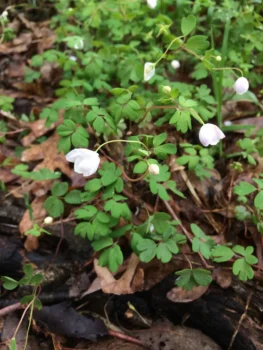
Eastern False Rue Anemone: A Delicate Spring Charmer for Your Woodland Garden
If you’re looking for a native wildflower that brings early spring magic to shaded corners of your garden, meet the Eastern False Rue Anemone (Enemion biternatum). This charming little perennial might not win any height contests, but what it lacks in stature, it more than makes up for in delicate beauty and ecological value.
What Makes This Native Special?
Eastern False Rue Anemone is a true North American native, naturally occurring across a impressive range from Canada down through the lower 48 states. You’ll find this woodland gem thriving in Alabama, Arkansas, Florida, Illinois, Indiana, Iowa, Kansas, Kentucky, Michigan, Minnesota, Mississippi, Missouri, New York, North Carolina, Ohio, Oklahoma, South Carolina, South Dakota, Tennessee, Texas, Virginia, West Virginia, and Wisconsin, plus Ontario, Canada.
- Species observed
- No observations
As a perennial forb (that’s botanist-speak for a non-woody plant that comes back year after year), this species has earned its place in the native plant hall of fame. You might also see it listed under its scientific synonym, Isopyrum biternatum.
Spring’s Early Bird
The real magic happens in early spring when Eastern False Rue Anemone produces clusters of small, pristine white flowers, each about half an inch across with five delicate petals. These blooms appear from March through May, often before the forest canopy fully leafs out, making the most of available sunlight. The compound leaves, divided into three leaflets, add a soft, feathery texture that complements the flowers beautifully.
This plant is what we call a spring ephemeral – it does its showy thing early in the season, then quietly retreats as summer heat arrives, sometimes going completely dormant until the following spring.
Perfect for Woodland Gardens
Eastern False Rue Anemone is tailor-made for woodland and shade gardens. It naturalizes beautifully, creating drifts of white flowers that look like they’ve always belonged there. This makes it perfect for:
- Native plant gardens
- Woodland settings
- Shaded borders
- Naturalized areas under trees
- Ground cover in cool, moist spots
Growing Conditions and Care
This adaptable native is surprisingly flexible when it comes to moisture preferences, which explains its varied wetland status across different regions. In some areas, it leans toward wetland conditions, while in others, it prefers drier upland sites. Generally, it thrives in:
- Partial to full shade
- Moist to moderately dry soils
- Rich, organic woodland soil
- USDA hardiness zones 4-8
- Cool growing conditions
The best part? Once established, Eastern False Rue Anemone requires minimal maintenance. Plant it in fall, give it some leaf mulch to mimic forest floor conditions, and let it do its thing.
Pollinator Powerhouse
Don’t let its small size fool you – this early bloomer is a crucial resource for pollinators emerging from winter. When few other flowers are available, Eastern False Rue Anemone provides vital nectar for small bees, flies, and other early-season pollinators. It’s like setting up a welcome breakfast buffet for your garden’s beneficial insects.
A Word About Conservation
While Eastern False Rue Anemone has a broad native range, it’s worth noting that in Alabama, this species has a rarity status of S2, meaning it’s imperiled in that state. If you’re gardening in Alabama or any area where this plant might be uncommon, please source your plants responsibly from reputable native plant nurseries rather than collecting from the wild.
Why Choose Eastern False Rue Anemone?
This native charmer offers gardeners a perfect combination of beauty, ecological value, and low maintenance. It fills that crucial early spring niche when both gardeners and pollinators are eager for signs of life, then gracefully steps back to let other plants take center stage. Plus, knowing you’re supporting local ecosystems and providing habitat for native wildlife makes every bloom that much sweeter.
Whether you’re creating a dedicated native plant garden or simply want to add some early spring interest to a shaded area, Eastern False Rue Anemone deserves a spot on your must-grow list. Just remember – good things come in small packages, and this delicate beauty is living proof.